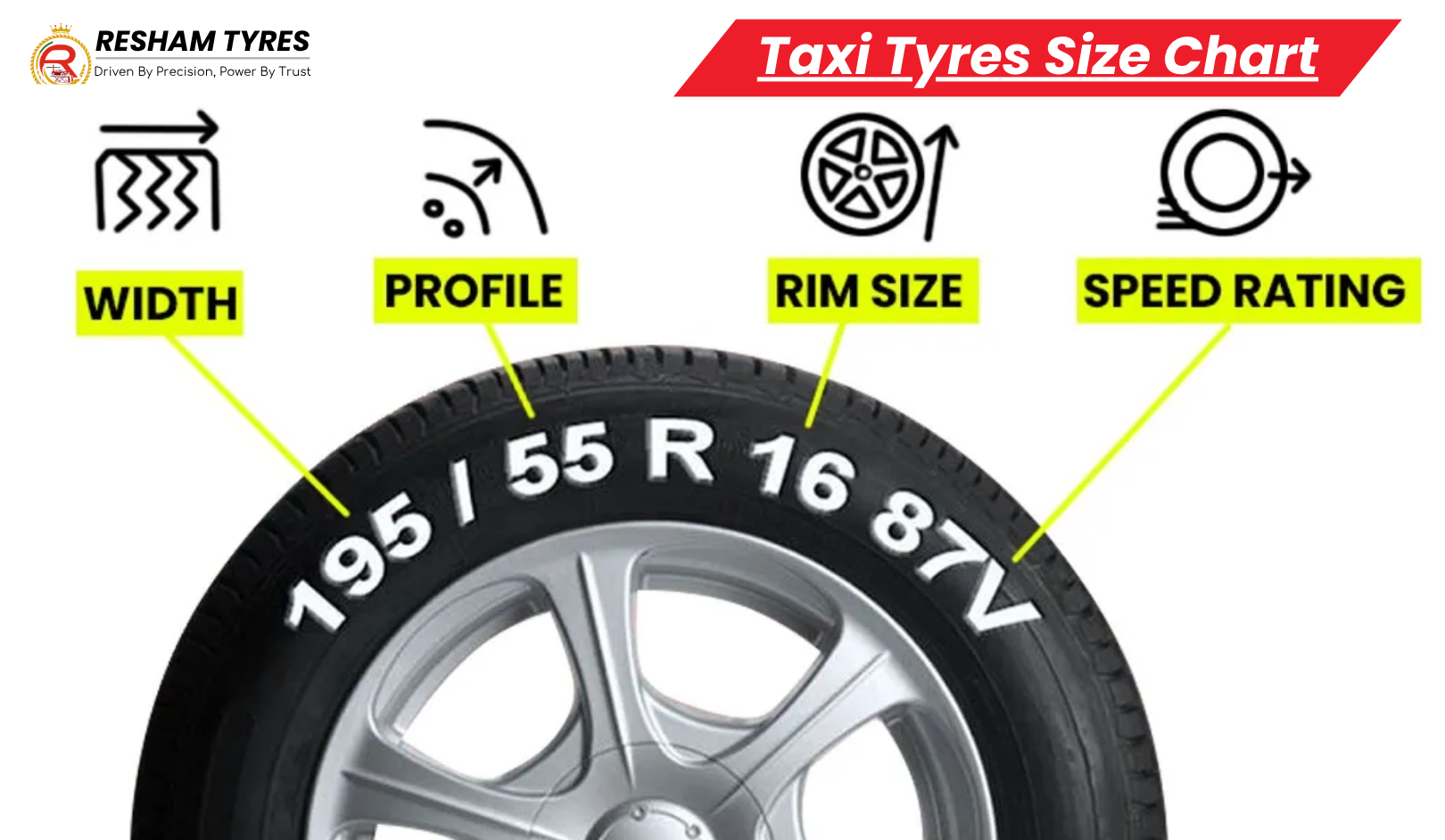
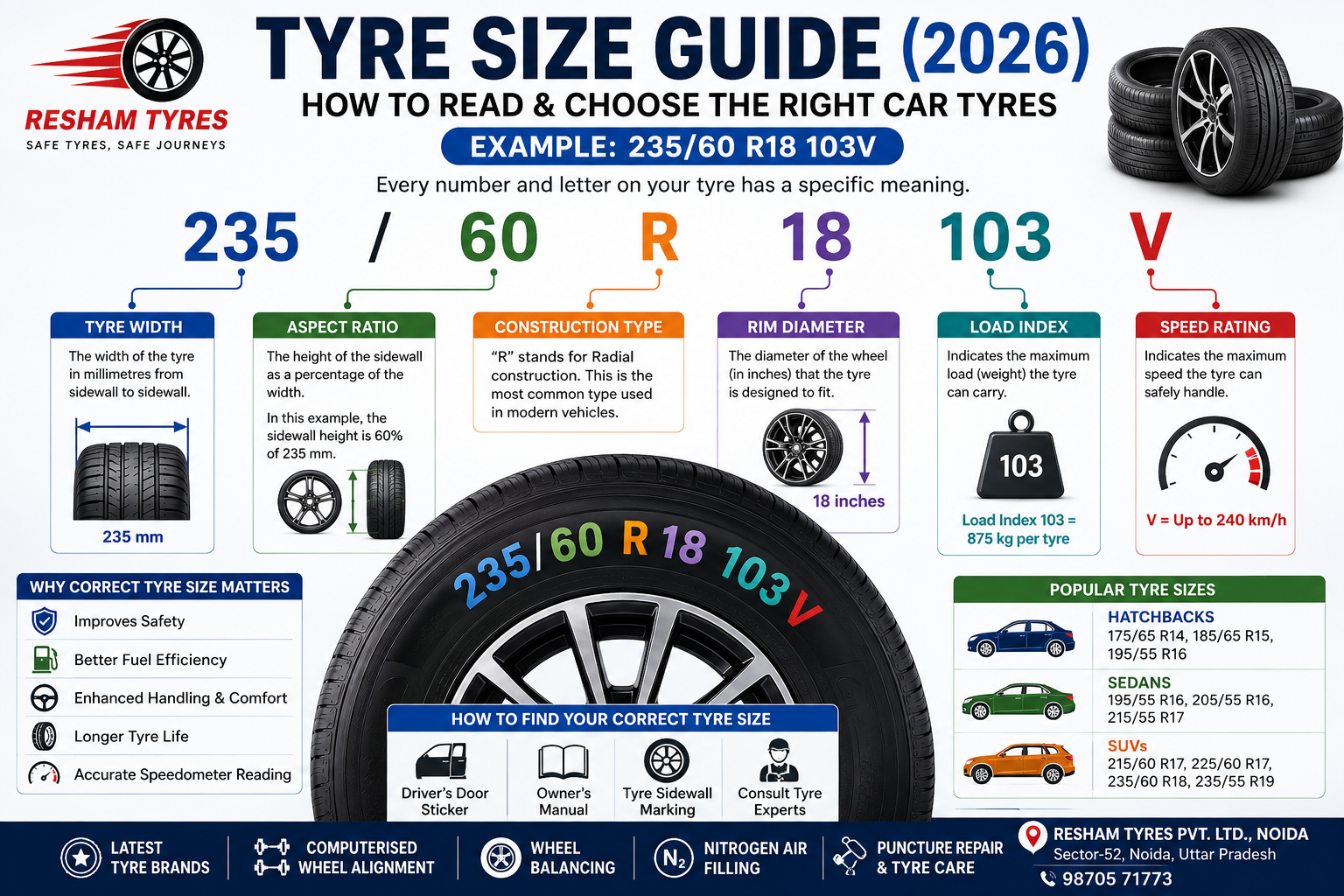
Choosing the correct tyre size is one of the most important decisions for maintaining your vehicle’s safety, performance, fuel efficiency, and driving comfort. Every tyre has a unique combination of numbers and letters printed on its sidewall, such as 235/60 R18 103V, which provides information about the tyre’s width, aspect ratio, construction type, rim diameter, load index, and speed rating.
Understanding these tyre markings helps you select the correct replacement tyres recommended by your vehicle manufacturer. Installing the wrong tyre size can affect steering stability, braking performance, suspension, ground clearance, speedometer accuracy, fuel economy, and overall handling.
When choosing new tyres, always consider:
- The manufacturer-recommended tyre size.
- Tyre width and aspect ratio suitable for your vehicle.
- Correct rim diameter for proper fitment.
- Appropriate load index for your vehicle’s weight.
- Speed rating that matches your driving requirements.
- Genuine tyres from trusted brands like Michelin, Bridgestone, Continental, MRF, CEAT, Apollo, and Yokohama.
- Professional tyre installation, computerized wheel alignment, and wheel balancing for maximum tyre life.
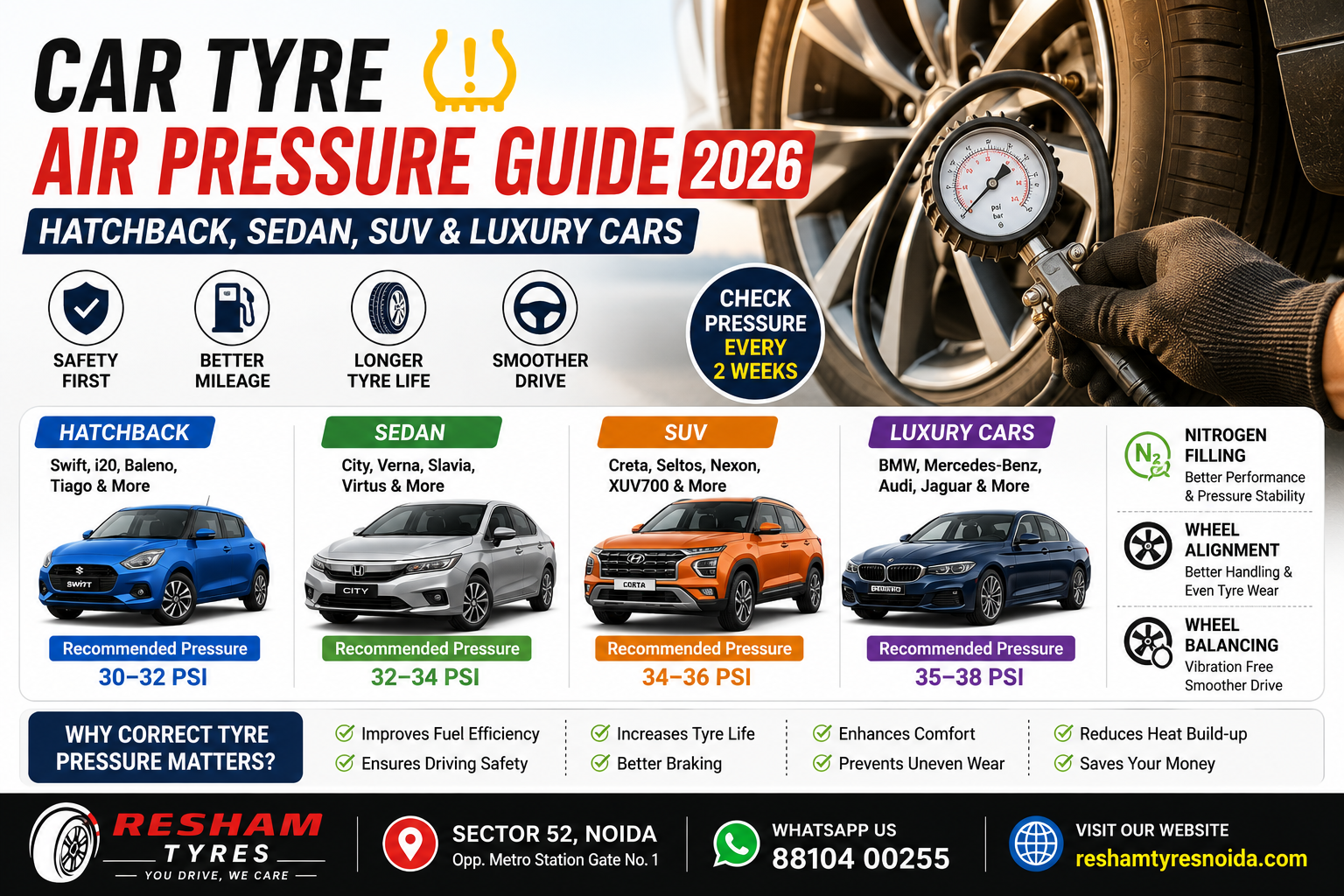
Regular tyre maintenance also plays a crucial role in extending tyre lifespan. Check tyre pressure every few weeks, rotate tyres every 8,000–10,000 km, inspect tread depth, and address uneven tyre wear promptly. Replacing worn or damaged tyres at the right time improves braking performance, enhances fuel efficiency, and ensures safer driving on Indian roads.
If you’re unsure about the correct tyre size for your hatchback, sedan, SUV, luxury car, or electric vehicle, consult experienced tyre professionals. At Resham Tyres Pvt. Ltd., Noida, our experts help customers choose the right tyres based on vehicle specifications, driving habits, and road conditions. We offer genuine premium tyres, expert tyre fitting, computerized wheel alignment, digital wheel balancing, nitrogen air filling, and complete tyre care solutions.
In this complete Tyre Size Guide (2026), you’ll learn how to read tyre sidewall markings, understand every number and letter, choose the right tyre size for Indian roads, and avoid common mistakes when replacing your tyres.
What is a Tyre Size?
Tyre size is a standardized combination of numbers and letters printed on every tyre. It specifies the tyre’s physical dimensions and performance specifications.
A typical tyre size looks like this:
235/60 R18 103V
Each part has a specific meaning:
- 235 – Tyre Width
- 60 – Aspect Ratio
- R – Radial Construction
- 18 – Rim Diameter
- 103 – Load Index
- V – Speed Rating
These specifications help ensure the tyre fits your vehicle correctly and performs safely under different driving conditions.
Why Choosing the Correct Tyre Size Matters
Many people assume that installing a slightly wider or taller tyre won’t make much difference. However, tyre size has a direct impact on several aspects of your vehicle’s performance.
1. Road Safety
The correct tyre size ensures proper road contact, giving your car better grip while accelerating, braking, and cornering.
Benefits include:
- Better braking performance
- Improved stability
- Enhanced wet-road grip
- Reduced risk of skidding
2. Fuel Efficiency
Tyres with the correct width and rolling resistance help your engine work more efficiently.
Incorrect tyre sizes may:
- Increase fuel consumption
- Put extra strain on the engine
- Reduce overall mileage
3. Driving Comfort
The right tyre size improves ride quality by absorbing road imperfections more effectively.
Advantages:
- Reduced cabin vibrations
- Better suspension performance
- Smoother driving experience
4. Longer Tyre Life
Using manufacturer-recommended tyre sizes promotes even tread wear and extends tyre lifespan.
Regular wheel alignment, wheel balancing, and tyre rotation further improve durability.
5. Speedometer Accuracy
Changing tyre diameter affects the number of wheel rotations, which can lead to incorrect speedometer and odometer readings.
Following the recommended tyre size helps maintain accurate vehicle data.
Understanding Tyre Size (Example: 235/60 R18 103V)
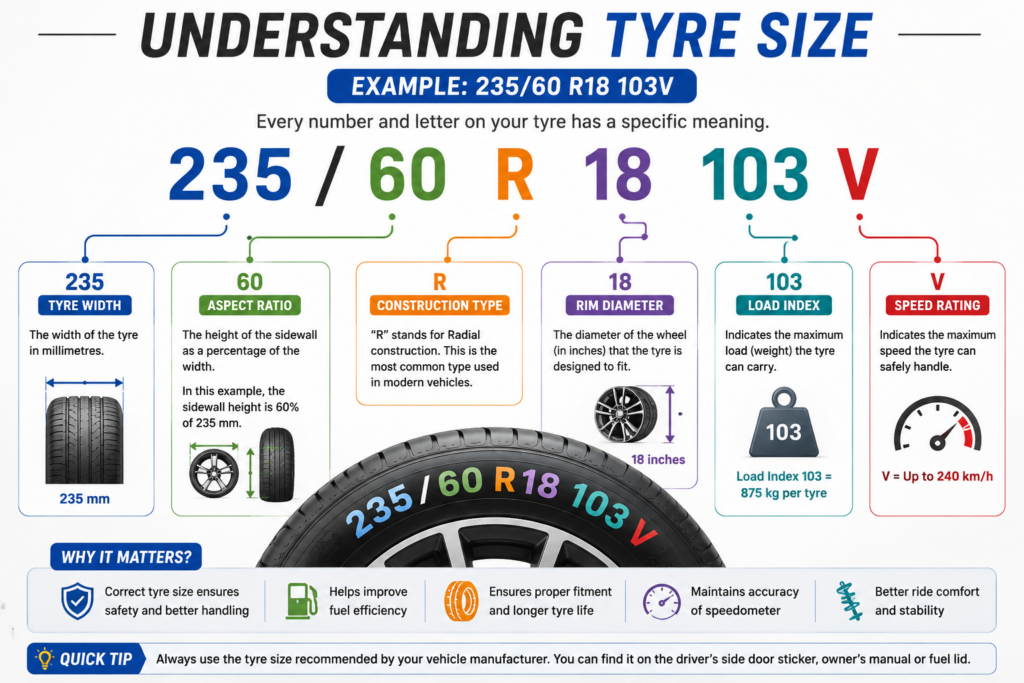
Let’s break down a common tyre size used on many SUVs.
Example:
235 / 60 R18 103V
Every number and letter tells you something important about the tyre.
235 – Tyre Width
The first number indicates the tyre’s width in millimetres.
Example:
235 = 235 mm
This is the distance from one sidewall to the other when the tyre is properly mounted.
Wider Tyres Offer:
✔ Better Road Grip
✔ Improved Cornering Stability
✔ Better Braking Performance
✔ Sportier Appearance
Things to Consider
Very wide tyres may:
- Slightly reduce fuel efficiency
- Increase rolling resistance
- Cost more to replace
Always choose the width recommended by your vehicle manufacturer.
60 – Aspect Ratio
The second number is called the Aspect Ratio.
It represents the sidewall height as a percentage of the tyre’s width.
Example
Width = 235 mm
Aspect Ratio = 60%
Sidewall Height =
235 × 60%
= 141 mm
Higher Aspect Ratio
Benefits:
- Softer ride
- Better comfort
- Improved shock absorption
Ideal for:
- Family cars
- Indian city roads
- Long-distance travel
Lower Aspect Ratio
Benefits:
- Better steering response
- Improved cornering
- Sportier handling
Commonly used on:
- Luxury sedans
- Sports cars
- Performance SUVs
R – Radial Construction
The letter R stands for Radial Construction.
Today, more than 95% of passenger vehicles use radial tyres because they provide the best balance of safety, durability, and comfort.
Advantages of Radial Tyres
✔ Better Fuel Efficiency
✔ Longer Tyre Life
✔ Reduced Heat Build-up
✔ Superior Road Grip
✔ Comfortable Ride
✔ Better High-Speed Stability
Radial tyres are ideal for Indian roads due to their durability and all-weather performance.
18 – Rim Diameter
The number after “R” indicates the wheel (rim) diameter in inches.
Example
18 = 18-inch Alloy Wheel
Your replacement tyre must match the rim diameter exactly.
You cannot install:
- 17-inch tyres on an 18-inch wheel
- 18-inch tyres on a 19-inch wheel
Choosing the correct rim diameter ensures proper fitment and safe driving.
103 – Load Index
The number 103 represents the tyre’s Load Index, which indicates the maximum weight the tyre can safely support.
Higher load index values are typically found on:
- SUVs
- Luxury vehicles
- Electric vehicles (EVs)
- Vehicles carrying heavier loads
We’ll explain load index in detail in Part 2.
V – Speed Rating
The final letter indicates the tyre’s maximum safe speed capability under recommended load conditions.
Common speed ratings include:
| Speed Rating | Maximum Speed |
|---|---|
| H | Up to 210 km/h |
| V | Up to 240 km/h |
| W | Up to 270 km/h |
| Y | Up to 300 km/h |
Always choose a tyre with the speed rating recommended by your vehicle manufacturer. We’ll cover speed ratings in greater detail in Part 2.
How to Find Your Car’s Recommended Tyre Size
If you’re unsure about the correct tyre size for your vehicle, check one of these locations:
Driver’s Door Sticker
Most vehicles display the recommended tyre size on a label inside the driver’s door frame.
Owner’s Manual
The manufacturer’s handbook provides the approved tyre sizes and recommended tyre pressure.
Existing Tyre Sidewall
If your current tyres are original equipment and correctly sized, the size is printed on the sidewall.
Authorized Tyre Dealer
A professional tyre expert can recommend the correct size based on your vehicle model and driving requirements.
Choosing the Right Tyre Size Based on Vehicle Type
Different vehicle categories require different tyre dimensions for optimal performance.
Hatchbacks
Look for tyres that offer:
- Low rolling resistance
- Comfortable ride
- Long tread life
- Better fuel efficiency
Examples:
- Maruti Suzuki Baleno
- Hyundai i20
- Tata Altroz
- Toyota Glanza
Sedans
Choose tyres that provide:
- Excellent highway stability
- Strong wet-road grip
- Quiet performance
- Smooth handling
Examples:
- Honda City
- Hyundai Verna
- Skoda Slavia
- Volkswagen Virtus
SUVs
SUV tyres should deliver:
- Reinforced sidewalls
- Higher load capacity
- Excellent braking performance
- Better stability
Examples:
- Hyundai Creta
- Kia Seltos
- Mahindra XUV700
- Toyota Fortuner
- MG Hector
Premium SUV tyres such as the Michelin Primacy SUV+ are engineered to provide outstanding grip, comfort, and durability for Indian roads.
Expert Tip from Resham Tyres
Before changing your tyre size or upgrading to larger alloy wheels, always consult experienced tyre professionals. Using an incorrect tyre size can affect handling, suspension performance, fuel efficiency, and overall safety.
At Resham Tyres Pvt. Ltd., Noida, our experts help you choose the right tyre size based on your vehicle, driving style, and manufacturer recommendations. We also provide computerized wheel alignment, wheel balancing, and professional tyre installation to ensure maximum performance and tyre life.
Load Index, Speed Rating, Tyre Size Charts, Upsizing & Common Tyre Size Mistakes
Choosing the correct tyre size involves more than understanding tyre width and rim diameter. Every tyre also includes a Load Index and Speed Rating, both of which are essential for your vehicle’s safety, handling, and overall performance.
In this section, we’ll explain these specifications in detail and help you understand whether you should change your tyre size or stick to the manufacturer’s recommendation.
Understanding Tyre Load Index
The Load Index is a numerical code printed on the tyre sidewall that indicates the maximum weight a tyre can safely carry when properly inflated.
For example:
235/60 R18 103V
Here,
103 = Load Index
This number corresponds to the tyre’s maximum load-carrying capacity.
Why is Load Index Important?
Every vehicle has a specific weight.
If the tyres cannot safely support that weight, it may lead to:
- Poor braking performance
- Tyre overheating
- Reduced tyre life
- Suspension damage
- Higher risk of tyre failure
Always choose tyres with the same or a higher load index than the one recommended by your vehicle manufacturer.
Common Load Index Chart
| Load Index | Maximum Load (Per Tyre) |
|---|---|
| 91 | 615 kg |
| 94 | 670 kg |
| 95 | 690 kg |
| 98 | 750 kg |
| 100 | 800 kg |
| 103 | 875 kg |
| 106 | 950 kg |
| 109 | 1030 kg |
SUVs, electric vehicles, and premium cars often require tyres with higher load indexes due to their additional weight.
Understanding Tyre Speed Rating
The Speed Rating is represented by a letter at the end of the tyre size.
Example:
235/60 R18 103V
Here,
V = Speed Rating
It indicates the maximum speed at which the tyre can safely perform under its rated load.
Common Speed Ratings
| Rating | Maximum Speed |
| T | 190 km/h |
| H | 210 km/h |
| V | 240 km/h |
| W | 270 km/h |
| Y | 300 km/h |
Why Speed Rating Matters
Tyres are engineered for specific speed capabilities.
Using tyres with the wrong speed rating can affect:
- Vehicle stability
- Heat dissipation
- Braking
- Steering response
- Overall safety
Choose the speed rating recommended by your vehicle manufacturer, especially if you regularly drive on expressways or highways.
Popular Tyre Sizes in India
Different vehicles use different tyre sizes depending on their design, weight, and intended use.
Popular Hatchback Tyre Sizes
- 165/80 R14
- 175/65 R14
- 175/70 R14
- 185/65 R15
- 195/55 R16
Suitable for:
- Maruti Baleno
- Hyundai i20
- Tata Altroz
- Toyota Glanza
Popular Sedan Tyre Sizes
- 185/65 R15
- 195/55 R16
- 205/55 R16
- 215/55 R17
Suitable for:
- Honda City
- Hyundai Verna
- Volkswagen Virtus
- Skoda Slavia
Popular SUV Tyre Sizes
- 215/60 R17
- 225/60 R17
- 235/60 R18
- 235/55 R19
- 255/55 R18
Suitable for:
- Hyundai Creta
- Kia Seltos
- Toyota Fortuner
- MG Hector
- Mahindra XUV700
Can You Change Your Tyre Size?
Many car owners ask:
Can I install wider tyres?
The answer is:
Yes—but only within the manufacturer’s approved limits.
Changing tyre size without professional guidance may negatively affect your vehicle’s:
- Suspension
- Fuel efficiency
- Steering geometry
- Ground clearance
- Speedometer accuracy
- Braking distance
Before upsizing or downsizing tyres, consult an experienced tyre expert.
Tyre Upsizing
Upsizing means increasing the rim diameter while reducing the sidewall height to maintain a similar overall tyre diameter.
Example
From:
205/55 R16
To:
225/45 R17
Benefits
✔ Better Road Grip
✔ Improved Cornering
✔ Premium Appearance
✔ Enhanced Steering Response
Disadvantages
- Slightly firmer ride
- Higher tyre cost
- Increased risk of alloy damage on potholes
Tyre Downsizing
Downsizing means fitting a smaller wheel with a taller tyre profile.
Advantages
- Better ride comfort
- Lower tyre replacement cost
- Improved shock absorption
- Better performance on rough roads
Suitable For
- Daily city driving
- Indian roads with potholes
- Long-distance travel
What Happens If You Install the Wrong Tyre Size?
Incorrect tyre sizes can lead to multiple issues.
Safety Risks
- Reduced braking performance
- Poor steering control
- Increased stopping distance
- Higher rollover risk on SUVs
Mechanical Problems
- Suspension wear
- Steering issues
- Wheel rubbing
- Incorrect ABS operation
Fuel Efficiency
Incorrect tyre sizes often increase rolling resistance, causing higher fuel consumption.
Speedometer Error
Larger or smaller tyre diameters can cause inaccurate speedometer and odometer readings.
Common Tyre Size Mistakes
Avoid these common mistakes when replacing tyres.
Buying Only Based on Price
Always prioritise safety and compatibility over the lowest price.
Ignoring Manufacturer Recommendations
Your vehicle manufacturer has tested specific tyre sizes to deliver the best balance of comfort, handling, and safety.
Installing Oversized Tyres
Excessively large tyres can rub against the wheel arch, damage suspension components, and reduce fuel efficiency.
Choosing the Wrong Load Index
A lower load index may not safely support your vehicle’s weight.
Ignoring Speed Rating
Installing tyres with a lower speed rating than recommended can compromise stability at higher speeds.
Mixing Different Tyre Sizes
Using different tyre sizes on the same axle can lead to:
- Uneven braking
- Steering instability
- Poor handling
Always use matching tyre sizes on each axle unless your vehicle manufacturer specifies a staggered setup.
Tyre Size Buying Checklist
Before purchasing new tyres, confirm the following:
✔ Correct Tyre Width
✔ Correct Aspect Ratio
✔ Correct Rim Diameter
✔ Recommended Load Index
✔ Recommended Speed Rating
✔ Recent Manufacturing Date
✔ Genuine Brand
✔ Suitable for Indian Road Conditions
✔ Manufacturer Warranty
✔ Professional Installation
✔ Computerized Wheel Alignment
✔ Digital Wheel Balancing
Why Wheel Alignment & Wheel Balancing Matter After Changing Tyres
Replacing tyres without proper wheel alignment and balancing can reduce tyre life and affect vehicle performance.
Wheel Alignment Benefits
- Straight steering
- Better fuel economy
- Longer tyre life
- Reduced suspension wear
- Improved road safety
Wheel Balancing Benefits
- Smooth driving
- No steering vibration
- Even tread wear
- Better ride comfort
- Increased tyre lifespan
At Resham Tyres Pvt. Ltd., Noida, every premium tyre installation is supported by advanced computerized wheel alignment and precision wheel balancing equipment, ensuring your new tyres deliver maximum performance from day one.
Expert Advice from Resham Tyres
Choosing the correct tyre size is one of the most important decisions for your vehicle. Whether you’re replacing worn tyres, upgrading to premium brands like Michelin, or considering tyre upsizing, always rely on expert guidance.
At Resham Tyres, our experienced technicians help you select the right tyre size based on your vehicle model, driving habits, and manufacturer specifications. We stock genuine premium tyres and provide professional fitting, wheel alignment, wheel balancing, and tyre care services to keep your car safe and comfortable on every journey.
Tyre Maintenance, FAQs, Expert Buying Tips, AI Overview & SEO Assets
Understanding tyre size is only the beginning. Proper tyre maintenance and timely replacement are equally important to ensure your vehicle remains safe, fuel-efficient, and comfortable to drive. In this final section, you’ll learn how to maintain your tyres, recognize replacement signs, and make smarter buying decisions.
How to Maintain Your Tyres for Maximum Life
Even premium tyres require regular care to deliver their best performance.
1. Maintain Correct Tyre Pressure
Driving with incorrect tyre pressure is one of the leading causes of uneven wear and reduced fuel efficiency.
Underinflated Tyres Can Cause
- Poor mileage
- Excessive shoulder wear
- Increased heat build-up
- Reduced tyre life
- Poor handling
Overinflated Tyres Can Cause
- Reduced road grip
- Faster centre tread wear
- Harsher ride
- Longer braking distance
Expert Tip: Check tyre pressure every 2–3 weeks and before every long trip.
2. Rotate Your Tyres Regularly
Tyres wear differently depending on their position.
Rotate tyres every:
8,000–10,000 km
Benefits include:
- Even tread wear
- Better handling
- Increased tyre lifespan
- Improved fuel economy
3. Get Computerized Wheel Alignment
Wheel alignment should be checked:
- Every 8,000–10,000 km
- After hitting a pothole
- After replacing suspension components
- If the steering pulls to one side
Proper alignment improves:
- Steering accuracy
- Tyre life
- Fuel efficiency
- Driving comfort
4. Wheel Balancing
Wheel balancing helps eliminate:
- Steering vibration
- Uneven tyre wear
- Suspension stress
- Highway driving discomfort
Balance your wheels whenever:
- New tyres are installed
- Tyres are rotated
- Vibration develops while driving
5. Inspect Tyres Monthly
Check for:
✔ Uneven tread wear
✔ Sidewall cracks
✔ Bulges
✔ Cuts
✔ Nails or punctures
✔ Air leakage
A quick inspection can help identify issues before they become expensive repairs.
When Should You Replace Your Tyres?
Replace your tyres if you notice any of the following:
Low Tread Depth
Reduced tread decreases grip, especially on wet roads, and increases braking distance.
Tyres Older Than 5–6 Years
Rubber naturally hardens over time, even if the tyres have sufficient tread.
Sidewall Damage
Visible cracks, cuts, or bulges weaken the tyre’s structure and increase the risk of failure.
Frequent Punctures
Repeated repairs may indicate that the tyre has reached the end of its safe service life.
Uneven Tyre Wear
Uneven wear often points to incorrect alignment, poor balancing, suspension issues, or incorrect tyre pressure.
Warning Signs You Should Never Ignore
Visit a professional tyre expert immediately if your vehicle shows any of these symptoms:
- Steering pulls to one side
- Steering wheel vibration
- Increased braking distance
- Excessive road noise
- Visible cracks or bulges
- Uneven tyre wear
- Frequent air pressure loss
- Tyres older than six years
- Exposed steel belts or fabric
Ignoring these warning signs can compromise vehicle safety and lead to expensive repairs.
Frequently Asked Questions (FAQs)
What does tyre size 235/60 R18 mean?
It indicates a tyre width of 235 mm, an aspect ratio of 60%, Radial construction, and an 18-inch rim diameter.
Where can I find my car’s tyre size?
You can find it:
- On the tyre sidewall
- Driver’s door sticker
- Owner’s manual
- Fuel flap (on some vehicles)
Can I change my tyre size?
Yes, but only within the vehicle manufacturer’s recommended limits. Incorrect tyre sizes can affect safety, suspension, fuel efficiency, and speedometer accuracy.
What happens if I install wider tyres?
Wider tyres generally improve grip and handling but may reduce fuel efficiency and increase replacement costs.
Is it safe to upsize tyres?
Tyre upsizing is safe when done correctly by experienced tyre professionals using manufacturer-approved dimensions.
Which tyre size is best for Indian roads?
The best tyre size is the one recommended by your vehicle manufacturer, as it provides the ideal balance of safety, comfort, and performance.
Does tyre size affect fuel efficiency?
Yes. Wider tyres often increase rolling resistance, which may slightly reduce fuel efficiency.
Can tyre size affect the speedometer?
Yes. Changing the overall tyre diameter can cause inaccurate speedometer and odometer readings.
How often should tyres be rotated?
Every 8,000–10,000 km, or according to your vehicle manufacturer’s maintenance schedule.
Why is wheel alignment important after replacing tyres?
Wheel alignment ensures even tyre wear, improves handling, enhances fuel efficiency, and extends tyre life.
What is the difference between tyre size and wheel size?
Tyre size refers to the tyre’s dimensions, while wheel size refers to the diameter of the alloy or steel rim.
Which tyre brands are best for Indian roads?
Leading brands include Michelin, Bridgestone, Continental, Yokohama, MRF, CEAT, Apollo, and JK Tyre, depending on your vehicle type and driving needs.
Expert Tips Before Buying New Tyres
Before replacing your tyres, always:
✔ Choose the manufacturer-recommended tyre size.
✔ Match the correct load index and speed rating.
✔ Buy tyres from an authorised dealer.
✔ Check the tyre manufacturing date.
✔ Replace tyres in pairs whenever possible.
✔ Get computerized wheel alignment and wheel balancing after installation.
✔ Inspect tyre pressure regularly.
✔ Rotate tyres every 8,000–10,000 km.
Why Choose Resham Tyres Pvt. Ltd., Noida?
Looking for the best tyre shop in Noida?
At Resham Tyres Pvt. Ltd., we help customers choose the right tyres based on their vehicle, driving habits, and budget.
Our Services
✔ Genuine Michelin Tyres
✔ Bridgestone Tyres
✔ Continental Tyres
✔ MRF, CEAT & Apollo Tyres
✔ Computerized Wheel Alignment
✔ Digital Wheel Balancing
✔ Nitrogen Air Filling
✔ TPMS Support
✔ Tyre Rotation
✔ Free Tyre Inspection
✔ Professional Tyre Installation
Whether you’re replacing tyres on a hatchback, sedan, SUV, luxury vehicle, or EV, our experts ensure the perfect fit for maximum safety and performance.