When your car starts pulling to one side, the steering vibrates, or your tyres wear out unevenly, most drivers feel confused about the real problem. Is it wheel alignment? Wheel balancing? Or both?
Understanding the difference between wheel alignment vs wheel balancing is essential for every car owner who wants better safety, smoother driving and longer tyre life. Unfortunately, many vehicle owners in Noida ignore early warning signs and end up spending much more on premature tyre replacement and suspension repairs.
At Resham Tyres, we regularly help customers diagnose and fix these issues with advanced computerized equipment. This expert guide will help you clearly understand what wheel alignment and wheel balancing mean, how they differ, when you need each service and why regular maintenance is critical for Indian road conditions.
Understanding the Basics of Wheel Health
Your car’s tyres are the only part of the vehicle that touches the road. Even a small imbalance or misalignment can affect:
- Steering control
- Tyre lifespan
- Fuel efficiency
- Ride comfort
- Suspension health
- Overall driving safety
Wheel alignment and wheel balancing are preventive maintenance services designed to keep your vehicle running smoothly. However, they solve different problems, which is why understanding their role is important.
What is Wheel Alignment?
Wheel alignment refers to adjusting the angles of the wheels so they are set according to the manufacturer’s specifications. The goal is to ensure that all four wheels are perfectly aligned with each other and the road surface.
The Three Main Alignment Angles
1. Camber
Camber is the inward or outward tilt of the wheel when viewed from the front.
- Negative camber: top of wheel tilts inward
- Positive camber: top of wheel tilts outward
Incorrect camber causes uneven tyre wear.
2. Caster
Caster is the angle of the steering axis when viewed from the side. It affects:
- Steering stability
- Straight-line tracking
- Steering return after turning
Improper caster can make steering feel loose or heavy.
3. Toe
Toe refers to how much the tyres turn inward or outward when viewed from above.
- Toe-in: tyres point inward
- Toe-out: tyres point outward
Wrong toe settings are the biggest cause of tyre wear.
What is Wheel Balancing?
Wheel balancing ensures that the weight of the tyre and wheel assembly is evenly distributed around the axle. Even a tiny weight imbalance can cause noticeable vibration, especially at higher speeds.
During balancing:
- The wheel is mounted on a balancing machine
- Heavy spots are detected
- Small weights are added to correct imbalance
The goal is to ensure the wheel rotates smoothly without wobbling.
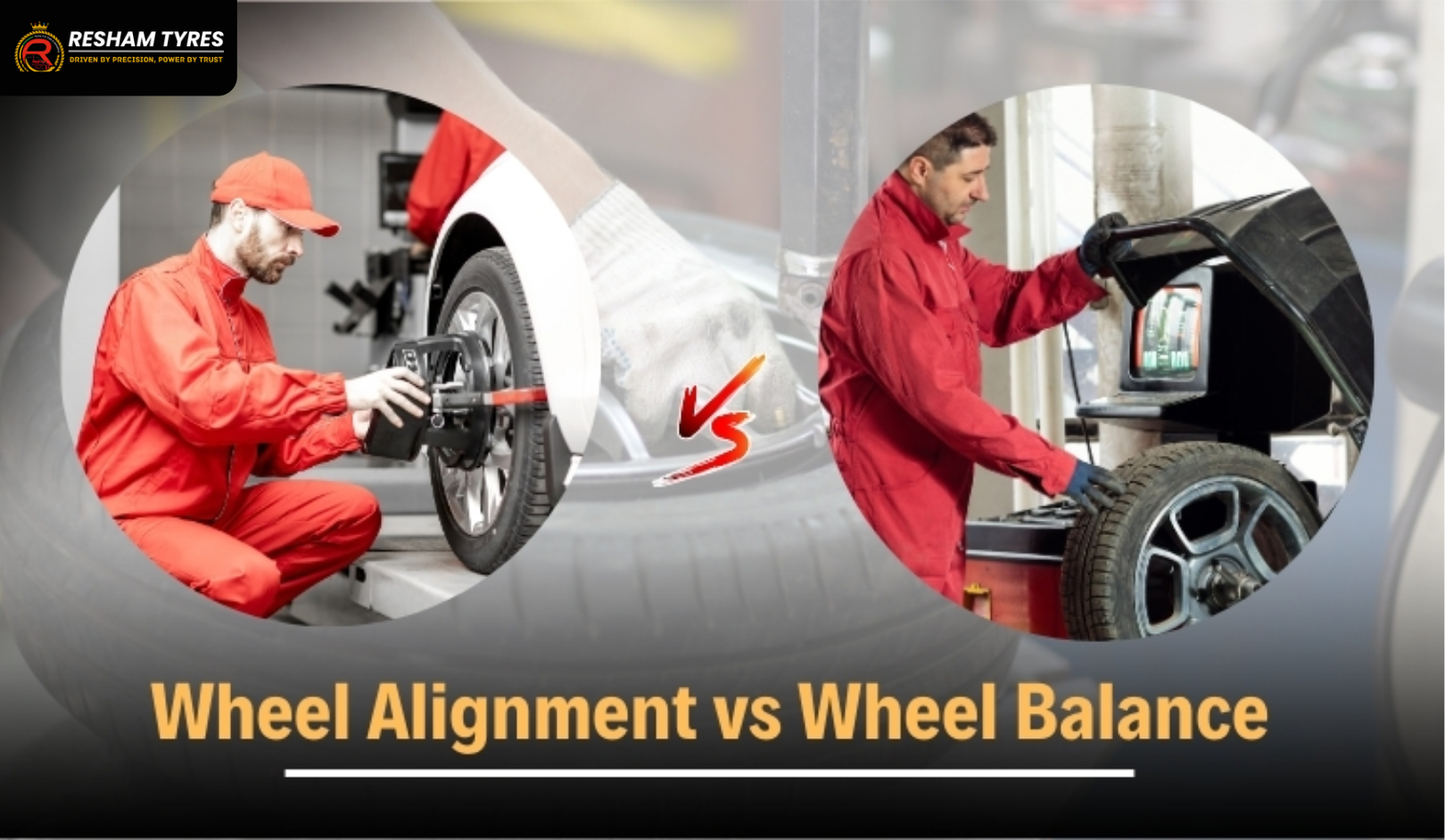
Wheel Alignment vs Wheel Balancing: Key Differences
Many car owners think both services are the same — they are not.
| Factor | Wheel Alignment | Wheel Balancing |
|---|---|---|
| Purpose | Correct wheel angles | Correct weight distribution |
| Main symptom | Car pulls to one side | Steering vibration |
| Affects | Tyre wear pattern | Ride smoothness |
| When needed | After hitting potholes, uneven wear | After tyre change, vibration |
| Equipment | Alignment machine | Balancing machine |
| Frequency | Every 5,000–10,000 km | Whenever vibration appears |
Important: In many cases, vehicles need both services together.
Warning Signs You Need Wheel Alignment
Drivers in Noida should watch for these common symptoms:
- Vehicle pulling left or right
- Steering wheel not centered
- Uneven tyre wear
- Steering feels loose
- Car drifting on straight road
- After hitting a pothole or curb
Ignoring these signs can reduce tyre life by up to 40%.
Warning Signs You Need Wheel Balancing
Balancing issues usually show up differently.
Common symptoms include:
- Steering wheel vibration at high speed
- Floor vibration
- Uneven vibration above 60–80 km/h
- New tyres but still vibration
- After tyre replacement
If you feel vibration mainly at highway speeds, balancing is the likely culprit.
Why Wheel Alignment and Balancing Are Crucial in Noida
Road conditions in Noida and NCR make these services even more important due to:
- Speed breakers
- Potholes
- Uneven construction patches
- Heavy traffic braking
- Frequent curb impacts
- Dust and heat conditions
At Resham Tyres Noida, we often see alignment issues even in relatively new cars due to urban driving conditions.
How Often Should You Get These Services Done?
Recommended Wheel Alignment Frequency
- Every 5,000–8,000 km
- After hitting a major pothole
- After suspension work
- When installing new tyres
- When steering feels off
Recommended Wheel Balancing Frequency
- Every 5,000–10,000 km
- After tyre replacement
- When vibration appears
- During tyre rotation
- After long highway drives
Regular checks save significant money in the long run.
Step-by-Step Wheel Alignment Process at Resham Tyres
When you visit our wheel alignment service in Noida, the process includes:
- Initial tyre inspection
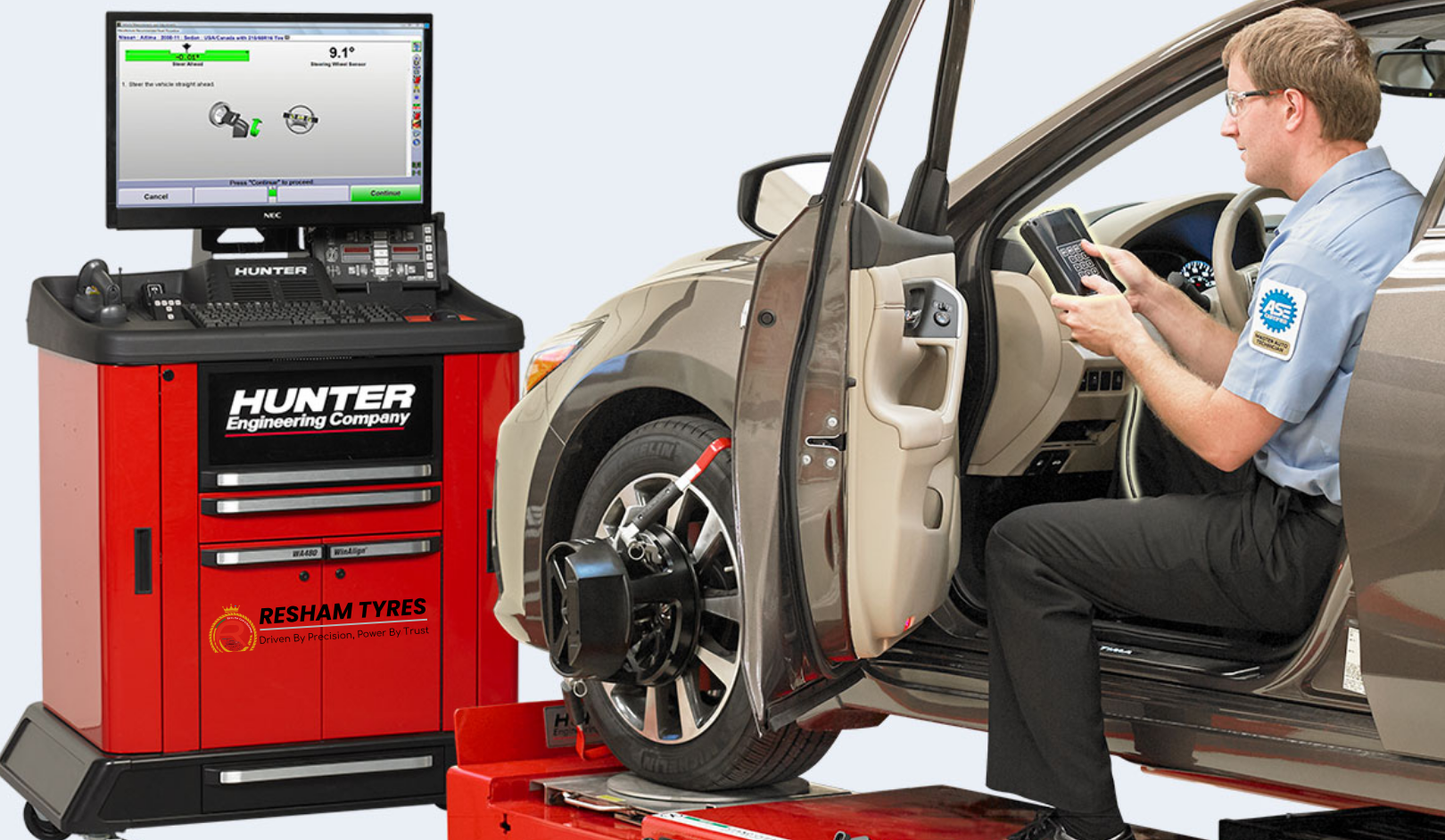
- Mounting sensors on wheels
- Computerized angle measurement
- Adjustment of camber, caster and toe
- Steering centering
- Final road test recommendation
We use latest computerized alignment machines for precision.
Step-by-Step Wheel Balancing Process
Our wheel balancing service in Noida follows professional standards:
- Wheel removed from vehicle
- Mounted on digital balancing machine
- Heavy spot detection
- Precision weight placement
- Re-check spin
- Refit wheel with proper torque
This ensures vibration-free driving.
Common Myths About Wheel Alignment and Balancing
Myth 1: New Cars Don’t Need Alignment
Truth: Even new cars can lose alignment due to transport and road conditions.
Myth 2: Balancing is Only Needed Once
Truth: Tyres wear unevenly over time, requiring periodic balancing.
Myth 3: Alignment and Balancing Are the Same
Truth: They fix completely different mechanical issues.
Myth 4: If Car Drives Fine, Service Is Not Needed
Truth: Many alignment issues start silently before visible symptoms.
Cost of Wheel Alignment and Balancing in Noida
Costs vary based on vehicle type and equipment quality.
Typical market range:
- Wheel alignment: ₹300 – ₹800
- Wheel balancing: ₹200 – ₹600
At Resham Tyres, we offer competitive pricing with advanced machines and trained technicians.
Why Choose Resham Tyres for Wheel Alignment and Balancing in Noida
Customers across Noida trust Resham Tyres because we focus on precision and transparency.
Our Key Advantages
- Advanced computerized alignment systems
- High-speed digital balancing machines
- Experienced tyre technicians
- Genuine multi-brand tyre availability
- Quick turnaround time
- Competitive local pricing
- Excellent customer satisfaction
We don’t just fix tyres — we optimize your driving experience.
Pro Tips to Extend Tyre Life
Follow these expert tips:
- Check tyre pressure monthly
- Rotate tyres every 8,000 km
- Avoid hard braking
- Slow down over potholes
- Get periodic alignment checks
- Balance wheels after tyre change
- Avoid overloading vehicle
Small habits create big savings.
Final Verdict: Alignment vs Balancing — Which Do You Need?
If your car:
- Pulls to one side → Alignment needed
- Vibrates at speed → Balancing needed
- Shows uneven tyre wear → Alignment likely
- Feels shaky after new tyres → Balancing likely
When in doubt, a professional inspection at Resham Tyres Noida can quickly identify the exact issue.
Visit Resham Tyres – Expert Wheel Care in Noida
Don’t wait until tyres wear out prematurely. Regular wheel alignment and balancing ensure:
- Safer driving
- Better mileage
- Longer tyre life
- Smooth ride quality
Resham Tyres is your trusted destination for professional wheel alignment and wheel balancing service in Noida.
Visit today for expert inspection and precision service.
FAQ
Q. Can I drive with bad wheel alignment?
It is not recommended. It causes uneven tyre wear and unsafe handling.
Q. Does wheel balancing improve mileage?
Indirectly yes, because smooth rotation reduces rolling resistance.
Q. Should alignment be done after new tyres?
Yes, it is strongly recommended.
Q. How long does alignment take?
Usually 30–45 minutes.