Choosing the right tyres for your car is essential for ensuring safety, fuel efficiency, driving comfort, and long-term vehicle performance. The best tyre depends on your vehicle type, recommended tyre size, driving habits, road conditions, and climate. Always select tyres that match the manufacturer’s specifications for width, aspect ratio, rim size, speed rating, and load index.
For most Indian drivers, premium all-season tubeless tyres offer an excellent balance of grip, durability, and comfort. If you frequently drive on highways or own an SUV, choosing premium tyres from trusted brands like Michelin, Bridgestone, Continental, Apollo, MRF, or CEAT can improve braking performance, wet-road traction, and overall ride quality.
Before buying new tyres, consider these key factors:
- Choose the correct tyre size recommended by your vehicle manufacturer.
- Select tyres based on your driving needs, whether for city roads, highways, or mixed terrain.
- Compare tyre brands based on safety, longevity, noise levels, and fuel efficiency rather than price alone.
- Check the tyre manufacturing date to ensure you are purchasing a recently manufactured tyre.
- Prefer tubeless tyres for better puncture safety and lower maintenance.
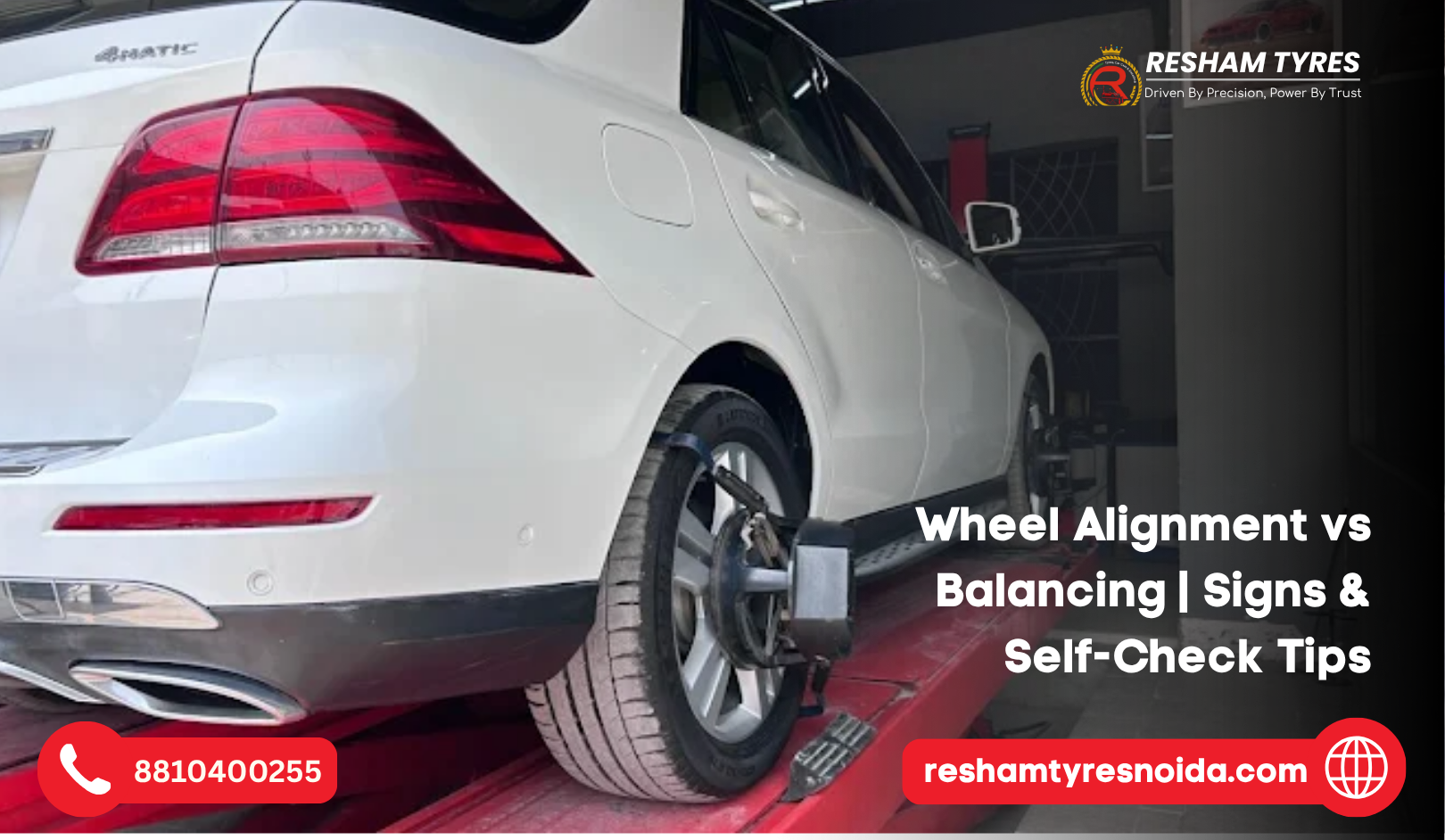
- Get computerized wheel alignment and wheel balancing after tyre installation to maximize tyre life and driving stability.
- Maintain the correct tyre pressure and rotate tyres every 8,000–10,000 km for even wear.
Replacing worn or ageing tyres at the right time significantly improves road safety. Warning signs such as low tread depth, sidewall cracks, bulges, uneven wear, steering vibration, or a vehicle pulling to one side indicate that your tyres should be inspected immediately.
If you’re looking for genuine premium tyres and expert tyre care, visit Resham Tyres Pvt. Ltd., Noida. Our experienced team provides professional guidance to help you choose the right tyres for your car, along with computerized wheel alignment, digital wheel balancing, tyre inspection, nitrogen air filling, and expert installation to ensure maximum performance and safety.
Your car’s tyres are much more than rubber wrapped around alloy wheels—they are the only point of contact between your vehicle and the road. Whether you’re driving through busy city streets, cruising on highways, or navigating rough rural roads, the right set of tyres directly impacts your safety, fuel efficiency, braking performance, ride comfort, and overall driving experience.
Despite this, many vehicle owners in India replace tyres based only on price or brand name. While cost is an important consideration, choosing tyres without understanding your driving habits, road conditions, vehicle type, and tyre specifications can lead to poor performance, faster wear, reduced mileage, and even serious safety risks.
With new tyre technologies, improved rubber compounds, EV-specific tyres, and changing road infrastructure in India, 2026 is the perfect time to understand how to select the right tyres for your vehicle.
This comprehensive guide explains everything you need to know before buying new tyres, whether you own a hatchback, sedan, SUV, luxury vehicle, or electric car.
Why Choosing the Right Tyres Matters
Many drivers believe that all tyres perform similarly. In reality, every tyre is designed for a specific purpose, driving style, and road condition.
Selecting the correct tyre offers several long-term benefits:
1. Better Road Safety
Premium tyres provide excellent grip during braking, cornering, and wet road driving.
Benefits include:
- Shorter braking distance
- Better stability
- Reduced skidding
- Improved emergency handling
- Better grip during rain
Good tyres can significantly improve driver confidence and passenger safety.
2. Improved Fuel Efficiency
Modern premium tyres use low rolling resistance technology, allowing the engine to work less while maintaining speed.
This results in:
- Better mileage
- Lower fuel consumption
- Reduced engine load
- Lower carbon emissions
For drivers covering long distances every month, this can translate into noticeable fuel savings.
3. Longer Tyre Life
Choosing the correct tyre according to your vehicle specifications ensures:
- Even tread wear
- Longer lifespan
- Better load distribution
- Lower maintenance costs
Regular wheel alignment, wheel balancing, and tyre rotation further extend tyre life.
4. Superior Driving Comfort
Premium tyres reduce:
- Cabin noise
- Road vibrations
- Steering harshness
The result is a quieter, smoother, and more comfortable drive, especially on highways.
5. Better Performance During Indian Weather
Indian roads experience diverse conditions throughout the year:
- Heavy monsoon rains
- Intense summer heat
- Dusty highways
- Potholes
- Speed breakers
- Gravel roads
Different tyre compounds perform differently under these conditions, making tyre selection even more important.
Types of Car Tyres Available in India
Understanding tyre categories is the first step toward choosing the best option.
1. Summer Tyres
Summer tyres are designed for:
- Hot weather
- Dry roads
- High-speed highway driving
Advantages
- Excellent dry grip
- Better braking
- Lower rolling resistance
- Improved cornering stability
Best For:
- Delhi NCR
- Rajasthan
- Gujarat
- Maharashtra
- Long-distance highway travel
2. All-Season Tyres
These tyres offer balanced performance throughout the year.
Advantages include:
- Suitable for dry and wet roads
- Longer tread life
- Comfortable ride
- Ideal for daily commuting
Recommended for:
- Most Indian car owners
- City driving
- Mixed road conditions
Many premium tyres, including the Michelin Primacy series, are designed to provide excellent all-season performance.
3. Performance Tyres
These tyres focus on maximum handling and grip.
Commonly used in:
- Luxury sedans
- Sports cars
- Premium SUVs
Features:
- Better cornering
- Higher speed ratings
- Superior braking
- Enhanced steering response
4. Touring Tyres
Touring tyres prioritize comfort over aggressive performance.
Benefits:
- Quiet ride
- Better mileage
- Long lifespan
- Comfortable suspension feel
Ideal for:
- Family cars
- Daily office commute
- Highway cruising
5. SUV Tyres
SUV tyres are specially engineered for heavier vehicles.
Features:
- Strong sidewalls
- Better load capacity
- Higher durability
- Improved stability
Popular examples include:
- Michelin Primacy SUV+
- Bridgestone Dueler
- Continental UltraContact UC6 SUV
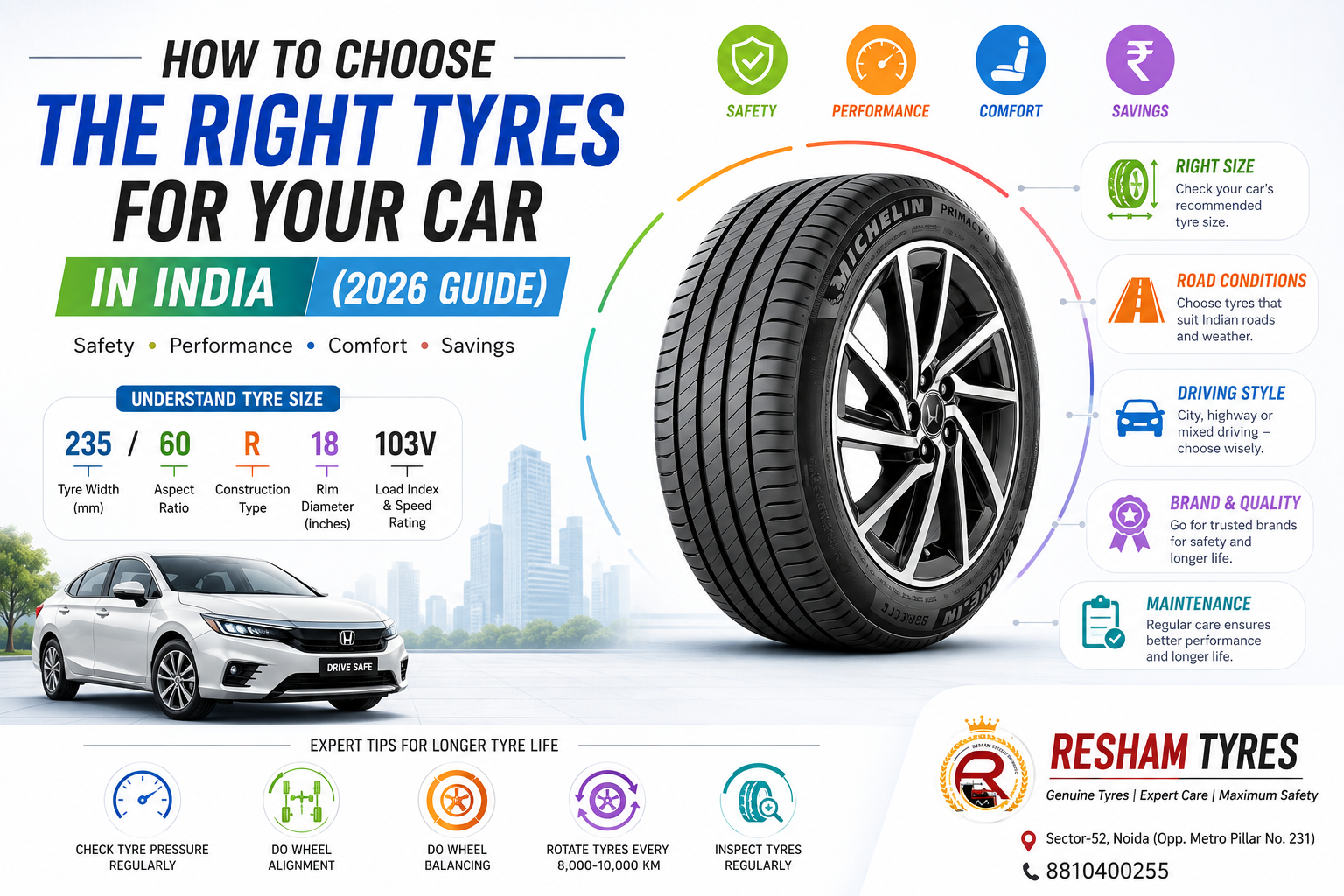
Understanding Tyre Size (Example: 235/60 R18)
One of the biggest mistakes buyers make is purchasing tyres without understanding the numbers printed on the sidewall.
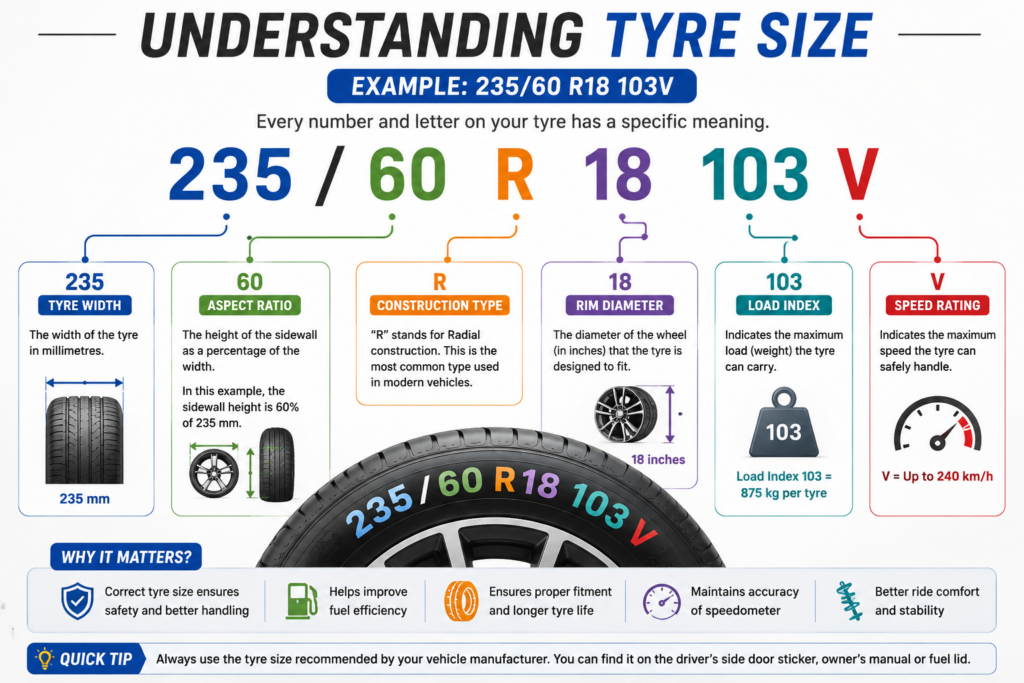
Consider this example:
235/60 R18
Each part has a specific meaning.
235
This is the tyre width measured in millimetres.
A wider tyre generally provides:
- Better road grip
- Improved cornering
- Enhanced braking
However, excessively wide tyres may reduce fuel efficiency and increase rolling resistance.
60
This number is known as the aspect ratio.
It represents the tyre sidewall height as a percentage of its width.
Higher aspect ratio:
- Softer ride
- Better comfort
- Increased shock absorption
Lower aspect ratio:
- Better handling
- Sportier appearance
- More responsive steering
R
The letter R indicates Radial Construction, the standard used in almost all modern passenger vehicles due to its durability, comfort, and fuel efficiency.
18
This refers to the wheel (rim) diameter in inches.
Your replacement tyre must match your wheel size to ensure proper fitment and safe performance.
How to Choose Tyres Based on Your Vehicle Type
Not every tyre suits every vehicle. Choosing according to your vehicle category ensures the best balance of safety, comfort, and performance.
Hatchbacks
Ideal tyre characteristics:
- Fuel efficient
- Comfortable ride
- Low road noise
- Long tread life
Suitable for:
- Maruti Suzuki Baleno
- Hyundai i20
- Tata Altroz
- Toyota Glanza
Sedans
Recommended features:
- Excellent highway stability
- Comfortable handling
- Strong wet grip
- Quiet performance
Suitable for:
- Honda City
- Hyundai Verna
- Skoda Slavia
- Volkswagen Virtus
SUVs
SUVs require tyres that can handle greater weight and varied road conditions.
Look for:
- Reinforced sidewalls
- Better load capacity
- Strong braking performance
- Excellent stability
Suitable for:
- Hyundai Creta
- Kia Seltos
- Mahindra XUV700
- Toyota Fortuner
- MG Hector
Premium options like the Michelin Primacy SUV+ are designed specifically to meet the needs of modern SUVs.
Choose Tyres According to Indian Road Conditions
Indian roads vary significantly, making it essential to match your tyres to the environments you drive in most often.
Mostly City Driving
Choose tyres that offer:
- Comfort
- Low noise
- Better fuel economy
- Longer life
Highway Driving
Prioritize:
- High-speed stability
- Better braking
- Heat resistance
- Excellent wet grip
Rough Roads
Look for:
- Strong sidewalls
- Durable tread compound
- High puncture resistance
Mixed Driving
If your travel includes city roads, highways, and occasional rough patches, all-season touring tyres provide the best balance of comfort, safety, and durability.
Summer, Monsoon & All-Season Tyres: Which One Should You Choose?
India’s diverse climate means tyre choice should reflect local weather and driving conditions.
Summer Tyres
- Best for hot, dry weather.
- Excellent grip and shorter braking distances on dry roads.
- Ideal for regions with long summers and frequent highway driving.
Monsoon Tyres
- Designed with deeper tread grooves to disperse water.
- Better resistance to hydroplaning.
- Suitable for areas experiencing heavy rainfall.
All-Season Tyres
- Offer a balance of wet and dry performance.
- Practical for drivers who want one set of tyres year-round.
- Recommended for most urban and suburban motorists in India.
For the majority of Indian drivers, premium all-season tyres deliver the best combination of safety, comfort, and value.
Tyre Brands, Buying Factors, Speed Ratings & Expert Buying Tips
Choosing the right tyre isn’t just about selecting a popular brand. Modern tyres are engineered differently based on performance, comfort, safety, durability, and driving conditions. Understanding these differences helps you make a smarter investment and enjoy a safer driving experience.
Premium vs Budget Tyres: Which One Should You Choose?
One of the most common questions car owners ask is:
“Should I buy premium tyres or save money with budget tyres?”
The answer depends on your driving habits, annual mileage, and expectations from your vehicle.
Premium Tyres
Premium tyres are developed using advanced rubber compounds, modern tread designs, and cutting-edge manufacturing technologies.
Advantages
✔ Superior Road Grip
Premium tyres offer excellent traction on both dry and wet roads, reducing the risk of skidding.
✔ Shorter Braking Distance
Better grip means your vehicle stops faster during emergency braking situations.
✔ Better Fuel Efficiency
Low rolling resistance reduces engine effort and improves mileage.
✔ Lower Road Noise
Premium tyres significantly reduce cabin noise, making long drives more comfortable.
✔ Longer Tyre Life
Although they cost more initially, they generally last longer when maintained properly.
Best For
- Luxury Cars
- SUVs
- Highway Drivers
- Long Daily Commutes
- Safety-Conscious Families
Budget Tyres
Budget tyres are ideal for drivers looking for economical solutions.
Advantages
- Lower purchase cost
- Suitable for city driving
- Easy availability
Limitations
- Slightly higher road noise
- Lower wet-road performance
- Faster tread wear
- Reduced highway stability
For drivers covering more than 15,000 km per year, premium tyres usually offer better long-term value.
Best Tyre Brands in India (2026 Comparison)
India offers a wide range of tyre manufacturers catering to different budgets and vehicle types.
Michelin
Michelin is globally recognised for innovation, safety, and premium driving comfort.
Strengths
✔ Exceptional Wet Grip
✔ Quiet Ride
✔ Long Tyre Life
✔ Excellent Highway Stability
✔ Premium Comfort
Best For
- Luxury Sedans
- SUVs
- Premium Hatchbacks
Popular Models
- Michelin Primacy 4 ST
- Michelin Primacy SUV+
- Michelin Pilot Sport Series
Bridgestone
Bridgestone is known for durability and consistent performance.
Ideal For
- Daily Commuting
- SUVs
- Highway Driving
Popular Models
- Turanza
- Dueler
- Ecopia
MRF
India’s largest tyre manufacturer.
Advantages
- Excellent availability
- Affordable pricing
- Good durability
- Strong after-sales support
Suitable For
- Hatchbacks
- Sedans
- Commercial Vehicles
CEAT
CEAT tyres provide a good balance between comfort and affordability.
Popular Among
- Family Cars
- City Drivers
- Mid-range Sedans
Apollo
Apollo offers tyres designed specifically for Indian road conditions.
Highlights
- Comfortable ride
- Good durability
- Competitive pricing
Continental
Continental focuses on premium technology and braking performance.
Known For
- Excellent Wet Grip
- High-Speed Stability
- Premium Comfort
Tubeless Tyres vs Tube Tyres
Modern passenger vehicles are equipped with tubeless tyres for several important reasons.
Tubeless Tyres
Advantages
✔ Better Safety
Air escapes slowly after a puncture, allowing the driver to stop safely.
✔ Better Fuel Efficiency
Lower rolling resistance.
✔ Lower Heat Generation
Ideal for highway driving.
✔ Easier Repairs
Most punctures can be repaired quickly without removing the tyre completely.
✔ Better Ride Comfort
Improved flexibility reduces vibrations.
Tube Tyres
Tube tyres are still found on some motorcycles and commercial vehicles.
Limitations
- Faster air loss during puncture
- Higher heat generation
- Increased rolling resistance
- More maintenance
For almost every modern passenger car, tubeless tyres are the recommended choice.
Understanding Tyre Speed Ratings
Every tyre has a speed rating that indicates the maximum speed it can safely sustain under specified conditions.
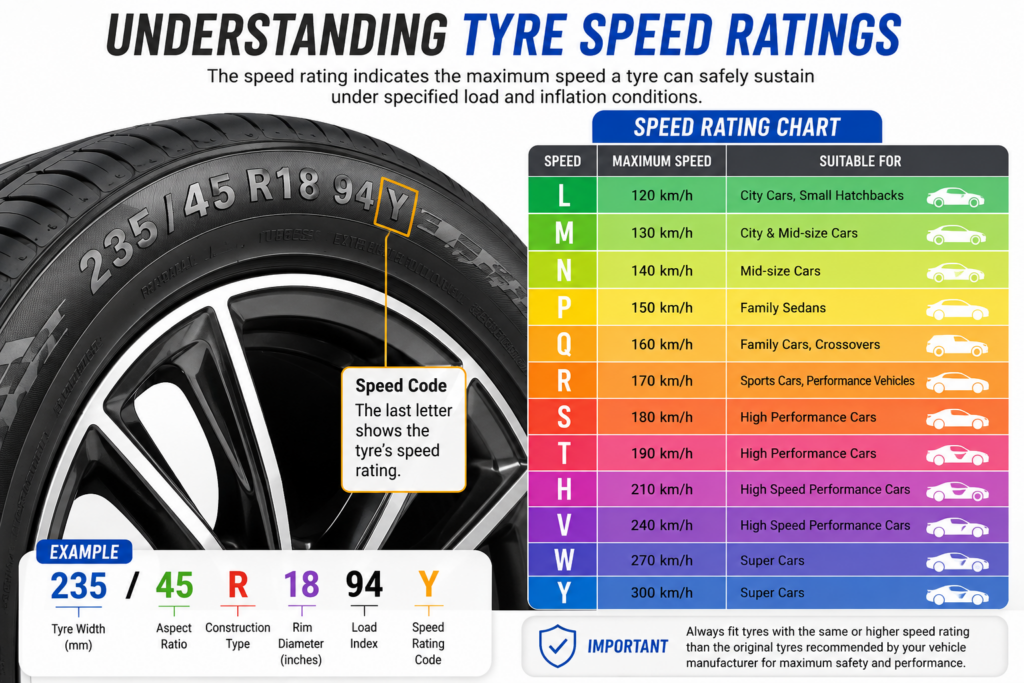
Common Ratings:
| Rating | Maximum Speed |
|---|---|
| H | 210 km/h |
| V | 240 km/h |
| W | 270 km/h |
| Y | 300 km/h |
Choosing a tyre with the correct speed rating ensures optimal handling, safety, and durability.
What is Load Index?
The load index indicates how much weight each tyre can safely carry.
A higher load index is essential for:
- SUVs
- Family vehicles
- Cars frequently carrying luggage
- Long-distance travel
Never install tyres with a lower load index than recommended by your vehicle manufacturer.
Fuel Efficiency & Rolling Resistance
Did you know your tyres directly influence your car’s fuel consumption?
Tyres with low rolling resistance require less energy to move, helping improve fuel economy.
Benefits
✔ Better Mileage
✔ Lower Fuel Costs
✔ Reduced Carbon Emissions
✔ Smoother Driving Experience
Premium tyre manufacturers invest heavily in reducing rolling resistance without compromising safety.
Wet Grip: A Critical Safety Feature
During monsoon season, tyres must quickly disperse water to maintain road contact.
High-quality tyres feature specially designed tread patterns that:
- Improve water evacuation
- Reduce hydroplaning
- Enhance braking performance
- Improve steering response
For regions with frequent rainfall, wet grip should be one of the most important buying considerations.
Common Mistakes People Make While Buying Tyres
Avoid these common mistakes to ensure safety and value for money.
Buying Only Based on Price
The cheapest tyre may cost more in the long run due to faster wear and reduced performance.
Ignoring Manufacturing Date
Tyres age even when unused.
Always check the DOT manufacturing date before purchasing.
Ideally, buy tyres manufactured within the last 12 months.
Choosing the Wrong Tyre Size
Using incorrect tyre sizes can affect:
- Fuel efficiency
- Steering
- Suspension
- Speedometer accuracy
- Ground clearance
Always follow the manufacturer’s recommended tyre size.
Ignoring Wheel Alignment
Installing new tyres without wheel alignment often leads to uneven wear.
Skipping Wheel Balancing
Improper wheel balancing causes:
- Steering vibration
- Uneven tread wear
- Reduced ride comfort
Replacing Only One Tyre
Whenever possible:
Replace tyres in pairs on the same axle to maintain balanced handling and braking.
Expert Tyre Buying Checklist
Before purchasing new tyres, ask yourself these questions:
✔ Does the tyre match my vehicle’s recommended size?
✔ Is it suitable for my driving style?
✔ Is it designed for Indian road conditions?
✔ Does it provide good wet grip?
✔ Is the manufacturing date recent?
✔ Does it have the correct speed rating?
✔ Does it have the correct load index?
✔ Is wheel alignment included?
✔ Is wheel balancing included?
✔ Is installation performed by trained professionals?
Why Wheel Alignment & Wheel Balancing Matter
Many car owners spend thousands of rupees on premium tyres but overlook wheel alignment and balancing after installation.
This can reduce tyre life significantly.
Wheel Alignment Benefits
- Straight steering
- Better handling
- Longer tyre life
- Improved fuel efficiency
- Reduced suspension wear
Wheel Balancing Benefits
- Eliminates steering vibration
- Smooth highway driving
- Even tyre wear
- Better ride comfort
- Protects suspension components
For the best results, both services should always be performed after fitting new tyres or whenever you notice uneven tyre wear or steering issues.
Expert Recommendation
Buying the right tyres is only the first step. Ensuring they are installed correctly, balanced accurately, and aligned using computerized equipment helps maximise their lifespan, improves driving comfort, and keeps you and your family safe on every journey.
Tyre Maintenance, Replacement Guide, FAQs, Expert Tips & SEO Assets
Choosing the right tyres is only half the journey. Proper maintenance, regular inspections, and timely replacement are essential to maximize safety, improve fuel efficiency, and extend tyre life. In this final section, you’ll learn how to keep your tyres in top condition and make informed decisions that save money over the long term.
How to Maintain Your Car Tyres for Maximum Life
Even the best premium tyres require regular maintenance to deliver their full performance.
1. Maintain Correct Tyre Pressure
Incorrect tyre pressure is one of the biggest reasons for reduced tyre life.
Underinflated Tyres Can Cause
- Poor fuel economy
- Excessive shoulder wear
- Increased heat build-up
- Higher risk of tyre failure
Overinflated Tyres Can Cause
- Reduced grip
- Faster centre tread wear
- Harsher ride quality
- Longer braking distance
Expert Tip: Check tyre pressure at least twice a month and before every long journey.
2. Rotate Tyres Regularly
Tyres wear differently depending on their position on the vehicle.
Rotate tyres every:
8,000–10,000 km
Benefits:
- Even tread wear
- Longer tyre life
- Better handling
- Improved fuel efficiency
3. Get Wheel Alignment Checked
Wheel alignment should be checked:
- Every 8,000–10,000 km
- After hitting a pothole
- After replacing suspension parts
- Whenever the steering pulls to one side
4. Wheel Balancing
Wheel balancing prevents:
- Steering vibration
- Uneven tyre wear
- Suspension damage
- Driver fatigue
Always balance tyres whenever:
- New tyres are installed
- Tyres are rotated
- Wheel weights fall off
5. Inspect Tyres Regularly
Check for:
✔ Cuts
✔ Cracks
✔ Bulges
✔ Nails
✔ Uneven wear
✔ Sidewall damage
Early detection can prevent costly repairs and improve road safety.
When Should You Replace Your Car Tyres?
Many drivers wait until tyres are completely worn out before replacing them.
This can be dangerous.
Replace tyres if:
Tread Depth Falls Below Safe Limits
Lower tread reduces grip, especially during rainy conditions.
Tyres Are More Than 5–6 Years Old
Rubber naturally hardens with age, even if the tyre appears unused.
Sidewall Cracks Appear
Cracked sidewalls indicate ageing and weakened structural strength.
Tyres Develop Bulges
Bulges often result from impact damage and increase the risk of sudden failure.
Frequent Punctures
If a tyre requires repeated repairs, replacement is usually the safer and more economical option.
Warning Signs You Should Never Ignore
Visit a professional tyre expert immediately if you notice:
- Vehicle pulling to one side
- Steering wheel vibration
- Uneven tyre wear
- Increased braking distance
- Road noise becoming louder
- Cracks on tyre sidewalls
- Tyre pressure dropping frequently
- Visible steel cords or fabric
- Tyres older than six years
- Bulges or cuts
Ignoring these warning signs can compromise safety and lead to higher maintenance costs.
Why Buy Tyres from an Authorized Tyre Dealer?
Purchasing from an authorised dealer ensures you receive:
- 100% genuine tyres
- Manufacturer warranty
- Expert fitting
- Computerized wheel alignment
- Precision wheel balancing
- Nitrogen air filling
- Professional after-sales support
A trusted tyre dealer also helps you select the right tyre based on your vehicle, driving style, and budget.
Why Choose Resham Tyres Pvt. Ltd., Noida?
If you’re looking for premium tyres and professional tyre care, Resham Tyres offers a comprehensive solution.
What We Offer
✔ Genuine Michelin, Bridgestone, Continental, Yokohama, CEAT, MRF, Apollo & other leading brands
✔ Computerized Wheel Alignment
✔ Digital Wheel Balancing
✔ Nitrogen Air Filling
✔ TPMS Support
✔ Tyre Rotation
✔ Professional Tyre Inspection
✔ Expert Advice
✔ Premium Customer Service
Whether you drive a hatchback, sedan, SUV, luxury vehicle, or electric car, our experienced team helps you choose the most suitable tyres for your driving needs.
Frequently Asked Questions (FAQs)
Which tyre brand is best in India?
The best brand depends on your driving requirements. Michelin, Bridgestone, Continental, MRF, Apollo, and CEAT are among the most trusted tyre manufacturers.
How long do car tyres last?
Typically between 40,000 and 60,000 kilometres, depending on driving style, road conditions, and maintenance.
How often should I replace my tyres?
Replace tyres when the tread reaches the legal wear limit, they show signs of damage, or they are more than 5–6 years old.
What is the ideal tyre pressure?
Always follow the pressure recommended by your vehicle manufacturer, usually mentioned on the driver’s door frame or owner’s manual.
Can wheel alignment improve fuel efficiency?
Yes. Proper wheel alignment reduces rolling resistance and helps improve mileage while extending tyre life.
Is wheel balancing necessary after replacing tyres?
Yes. Wheel balancing ensures smooth driving, prevents steering vibrations, and promotes even tyre wear.
Should all four tyres be replaced together?
Replacing all four tyres is ideal. If that’s not possible, replace tyres in pairs on the same axle for balanced handling and braking.
How can I check tyre manufacturing date?
Look for the DOT code on the tyre sidewall. The last four digits indicate the week and year of manufacture.
Are tubeless tyres better than tube tyres?
Yes. Tubeless tyres are safer, more fuel-efficient, and easier to repair, making them the preferred choice for modern passenger vehicles.
Why do tyres wear unevenly?
Common causes include incorrect tyre pressure, poor wheel alignment, improper wheel balancing, worn suspension components, and aggressive driving.