
Have you ever noticed your steering wheel vibrating while driving, especially at higher speeds or while braking? Although it may seem like a minor issue initially, steering wheel vibration is often an early warning sign that something is wrong with your vehicle’s tyres, wheels, suspension, steering system, or braking components.
Ignoring these vibrations can lead to uneven tyre wear, poor fuel efficiency, reduced driving comfort, increased repair costs, and, most importantly, compromised road safety. Whether you drive a hatchback, sedan, SUV, or luxury vehicle like BMW, Mercedes-Benz, Audi, Jaguar, or Volvo, identifying the root cause early can save both time and money.
At Resham Tyres, we provide professional Wheel Balancing Service in Noida, computerized wheel alignment, tyre inspection, premium tyre replacement, and complete tyre care solutions. Our experienced technicians help diagnose steering-related issues accurately, ensuring your vehicle delivers smooth handling, maximum comfort, and superior safety.
This guide explains the most common reasons behind steering wheel vibration, how to identify the problem, and the best solutions to restore a smooth driving experience.
Why Steering Wheel Vibration Should Never Be Ignored
Many drivers continue driving even after noticing vibrations because the vehicle still appears to function normally. Unfortunately, steering vibration rarely disappears on its own.
Ignoring the issue can result in:
- Faster tyre wear
- Increased suspension damage
- Reduced braking performance
- Poor steering control
- Lower fuel efficiency
- Expensive repairs later
- Unsafe highway driving
If your steering wheel starts vibrating, the best approach is to schedule a professional inspection immediately.
What Does Steering Wheel Vibration Mean?
Steering wheel vibration occurs when unwanted forces travel through the tyres, wheels, suspension, or steering system and are transmitted to the steering wheel.
The vibration may occur:
- At low speeds
- Only during highway driving
- While braking
- During acceleration
- While turning
- After tyre replacement
The driving condition under which the vibration appears often helps identify the actual problem.
Common Symptoms of Steering Wheel Vibration
Watch for these warning signs:
- Steering wheel shaking above 70 km/h
- Steering wheel vibrating while braking
- Vehicle pulling to one side
- Uneven tyre wear
- Increased road noise
- Vehicle bouncing at high speed
- Steering feels loose
- Cabin vibration
- Abnormal tyre wear patterns
If you experience one or more of these symptoms, professional diagnosis is recommended.
Top 12 Causes of Steering Wheel Vibration While Driving
1. Improper Wheel Balancing
One of the most common causes of steering wheel vibration is improper wheel balancing.
Every wheel and tyre assembly has slight weight variations. During wheel balancing, small balancing weights are installed to ensure the wheel rotates evenly.
If balancing weights fall off or balancing is inaccurate, the wheel begins to wobble while rotating.
Common Symptoms
- Steering wheel vibration between 70–120 km/h
- Smooth driving at lower speeds
- Increasing vibration as speed rises
Solution
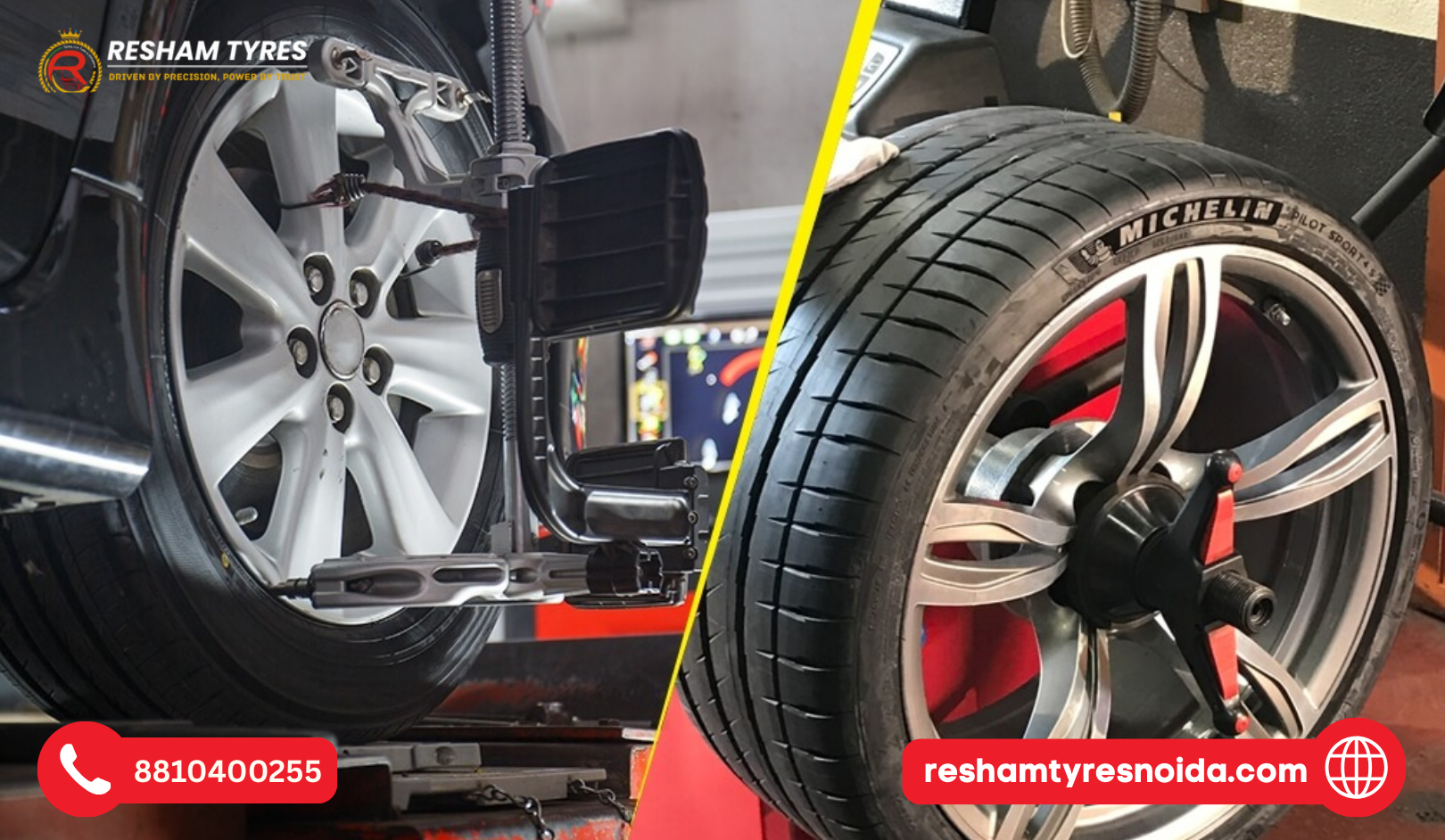
Professional computerized Wheel Balancing Service in Noida ensures even weight distribution and smooth wheel rotation.
At Resham Tyres, advanced wheel balancing equipment accurately identifies imbalance and restores perfect balance.
2. Incorrect Wheel Alignment
Wheel alignment determines the angles at which your wheels contact the road.
If alignment changes due to potholes, speed breakers, or suspension wear, steering problems often appear.
Symptoms
- Vehicle pulling left or right
- Uneven tyre wear
- Crooked steering wheel
- Reduced handling
Solution
Computerized wheel alignment restores factory alignment specifications.
Benefits include:
- Improved tyre life
- Better fuel economy
- Stable steering
- Reduced tyre wear
3. Uneven Tyre Wear
Tyres naturally wear over time, but uneven wear often indicates an underlying issue.
Common causes include:
- Poor alignment
- Incorrect tyre pressure
- Suspension wear
- Lack of tyre rotation
Uneven tread creates vibration because the tyre no longer rolls smoothly.
Warning Signs
- Flat spots
- Feathered edges
- Shoulder wear
- Cupping
Professional inspection can determine whether tyre replacement is necessary.
4. Damaged Tyres
Road hazards such as potholes, sharp objects, and debris can damage tyres internally.
Common tyre damage includes:
- Sidewall bulges
- Broken belts
- Cuts
- Internal separation
Damaged tyres cannot rotate properly and often produce steering vibration.
Never ignore visible tyre damage.
5. Bent Alloy Wheels
Luxury vehicles equipped with alloy wheels are especially vulnerable to wheel damage.
Hitting deep potholes or curbs may bend the wheel.
A bent alloy causes:
- Steering vibration
- Air leakage
- Uneven tyre wear
- Poor balancing
Professional inspection can confirm whether wheel repair or replacement is required.
6. Suspension Problems
Your suspension system absorbs road shocks while keeping tyres in contact with the road.
Worn suspension components may include:
- Control arms
- Ball joints
- Bushings
- Shock absorbers
- Struts
Symptoms include:
- Steering vibration
- Poor handling
- Knocking noises
- Vehicle instability
Luxury vehicles require periodic suspension inspection to maintain optimal performance.
7. Warped Brake Discs
If steering vibration occurs only during braking, warped brake discs are often responsible.
Excessive heat may cause brake rotors to become uneven.
Symptoms
- Steering wheel shakes while braking
- Brake pedal pulsation
- Longer stopping distance
Replacing or resurfacing brake discs usually resolves the issue.
8. Worn Wheel Bearings
Wheel bearings allow wheels to rotate smoothly.
Damaged bearings create excessive movement, resulting in vibration and noise.
Common signs include:
- Humming sound
- Steering vibration
- Wheel looseness
- Grinding noise
Ignoring bearing problems can create serious safety risks.
9. Loose Steering Components
Several steering components wear over time.
These include:
- Tie rod ends
- Steering rack
- Steering joints
Loose components reduce steering precision.
Common symptoms:
- Steering play
- Vibration
- Vehicle wandering
- Unstable handling
Professional inspection should never be delayed.
10. Incorrect Tyre Pressure
Tyres with incorrect inflation pressure wear unevenly.
Under-inflated tyres create:
- Increased rolling resistance
- Heat buildup
- Poor handling
Over-inflated tyres reduce road contact.
Both conditions contribute to steering vibration.
Always maintain manufacturer-recommended tyre pressure.
11. Driveshaft or Axle Problems
Front-wheel-drive and all-wheel-drive vehicles rely on CV joints and driveshafts.
Wear or damage can create:
- Steering vibration
- Clicking noises
- Acceleration vibration
Professional diagnosis is required.
12. Faulty Hub Assembly
The wheel hub connects tyres to the suspension.
Damage may cause:
- Excessive vibration
- Wheel movement
- Poor steering stability
Replacement is usually required.
Steering Wheel Vibrates at Different Speeds
The speed at which vibration occurs provides valuable clues.
Below 40 km/h
Possible causes:
- Tyre damage
- Flat spots
- Bent wheels
Between 60–80 km/h
Possible causes:
- Wheel imbalance
- Alignment issues
Above 100 km/h
Most common causes:
- Poor wheel balancing
- Bent alloy wheels
- Suspension wear
- Premium tyre defects
Luxury vehicles especially require accurate balancing at highway speeds.
Steering Wheel Vibration While Braking
If vibration appears only when applying brakes, possible causes include:
- Warped brake discs
- Uneven brake pads
- Loose suspension components
- Damaged wheel bearings
Brake inspection should be performed immediately.
Steering Wheel Vibration After Tyre Replacement
Many customers visit Resham Tyres after replacing tyres elsewhere because vibrations begin immediately afterward.
Common reasons include:
- Incorrect wheel balancing
- Improper tyre fitting
- Damaged balancing weights
- Incorrect tyre pressure
- Alignment not performed
Whenever new tyres are installed, computerized wheel balancing and wheel alignment should also be completed.
Wheel Balancing vs Wheel Alignment
Many vehicle owners confuse these two services.
Although related, they solve different problems.
What is Wheel Balancing?
Wheel balancing ensures the tyre and wheel rotate evenly by correcting weight distribution.
It prevents:
- Steering vibration
- Uneven tyre wear
- High-speed wobbling
What is Wheel Alignment?
Wheel alignment adjusts wheel angles according to manufacturer specifications.
It prevents:
- Vehicle pulling
- Uneven tyre wear
- Crooked steering
- Poor handling
When Do You Need Wheel Balancing?
Schedule wheel balancing if:
- Steering vibrates above 70 km/h
- New tyres are installed
- Wheels are repaired
- Balancing weights fall off
- After hitting potholes
When Do You Need Wheel Alignment?
Alignment should be checked when:
- Vehicle pulls left or right
- Steering wheel is off-center
- Uneven tyre wear appears
- Suspension work is completed
- After severe road impacts
Signs You Need Wheel Balancing Service in Noida
Your vehicle may require professional balancing if you notice:
- Steering wheel vibration
- Cabin vibration
- Uneven tyre wear
- High-speed instability
- Road noise
- Reduced driving comfort
At Resham Tyres, our computerized Wheel Balancing Service in Noida accurately diagnoses these issues, helping extend tyre life and improve overall driving performance.
Why Ignoring Steering Wheel Vibration Can Be Dangerous
Many drivers postpone inspections until the vibration becomes severe.
This often leads to:
- Premature tyre replacement
- Suspension damage
- Steering failure
- Increased repair costs
- Reduced passenger comfort
- Unsafe driving conditions
Prompt diagnosis is always more cost-effective than repairing extensive damage later.
Benefits of Professional Wheel Balancing
Professional wheel balancing offers several long-term benefits:
- Smooth steering response
- Improved highway stability
- Longer tyre life
- Better fuel efficiency
- Reduced suspension stress
- Enhanced passenger comfort
- Lower maintenance costs
Using advanced computerized equipment ensures greater accuracy than traditional balancing methods.
How Computerized Wheel Balancing Works
Modern wheel balancing machines measure even the smallest weight differences in the tyre and wheel assembly.
The technician then installs precision balancing weights to eliminate vibration.
The process is:
- Fast
- Accurate
- Non-invasive
- Suitable for all vehicle types, including luxury cars and SUVs
Regular balancing helps maintain optimal vehicle performance, especially for drivers who frequently travel on highways.
Common Mistakes Drivers Make
Many steering vibration issues become worse because of avoidable mistakes, such as:
- Ignoring early warning signs
- Delaying wheel balancing
- Skipping wheel alignment after tyre replacement
- Driving with damaged tyres
- Maintaining incorrect tyre pressure
- Installing low-quality tyres
- Neglecting routine tyre inspections
Preventive maintenance is always more economical than major repairs and helps ensure safer, smoother driving.
Steering Wheel Vibration in Luxury Cars
Luxury vehicles are engineered for exceptional ride quality and precise steering. If you notice steering wheel vibration in a premium vehicle, it should never be ignored. Since luxury cars use advanced suspension systems, larger alloy wheels, and performance tyres, even a minor imbalance can significantly affect driving comfort.
At Resham Tyres, we specialize in Wheel Balancing Service in Noida for luxury and premium vehicles using advanced computerized equipment.
BMW Steering Wheel Vibration
BMW vehicles are designed for dynamic handling and high-speed stability.
Common causes of steering vibration include:
- Incorrect wheel balancing
- Damaged alloy wheels
- Run-flat tyre wear
- Suspension bush wear
- Wheel alignment issues
Recommended Services:
- Computerized Wheel Balancing
- Four-Wheel Alignment
- Tyre Inspection
- Suspension Check
Mercedes-Benz Steering Wheel Vibration
Mercedes vehicles emphasize ride comfort and smooth handling.
Steering vibration may result from:
- Worn suspension arms
- Bent alloy wheels
- Uneven tyre wear
- Incorrect balancing
- Brake rotor issues
Professional balancing restores the refined driving experience expected from Mercedes-Benz vehicles.
Audi Steering Wheel Vibration
Audi vehicles equipped with Quattro AWD systems require extremely accurate wheel balancing.
Symptoms may include:
- Highway steering vibration
- Cabin vibration
- Steering pull
- Uneven tyre wear
Regular alignment and balancing help maintain Audi’s driving precision.
Jaguar Steering Wheel Vibration
Jaguar vehicles use performance-oriented suspension systems.
Common causes include:
- Wheel imbalance
- Suspension wear
- Damaged tyres
- Bent rims
Volvo Steering Wheel Vibration
Volvo prioritizes safety.
Steering vibration may indicate:
- Alignment issues
- Tyre imbalance
- Suspension wear
- Brake component problems
Steering Wheel Vibration in SUVs
SUVs place greater load on tyres and suspension components.
Common SUV models serviced at Resham Tyres include:
- Toyota Fortuner
- Mahindra XUV700
- Tata Safari
- Hyundai Creta
- Kia Seltos
- MG Hector
- BMW X5
- Mercedes GLC
- Audi Q5
Common causes include:
- Larger wheel imbalance
- Uneven tyre wear
- Suspension wear
- Incorrect tyre pressure
How Often Should You Balance Your Wheels?
Wheel balancing should be performed:
Every 8,000–10,000 km
This helps maintain smooth driving and extend tyre life.
After Tyre Replacement
Every new tyre installation should include balancing.
After Hitting a Large Pothole
Road impacts may disturb wheel balance.
When Steering Starts Vibrating
Never ignore steering vibration.
During Periodic Vehicle Service
Preventive balancing reduces long-term maintenance costs.
Preventive Maintenance Tips
Following these practices helps prevent steering wheel vibration.
Maintain Correct Tyre Pressure
Incorrect pressure leads to:
- Uneven wear
- Poor handling
- Reduced fuel efficiency
Check tyre pressure at least once a month.
Rotate Tyres Regularly
Tyre rotation ensures even tread wear.
Recommended interval:
Every 8,000–10,000 km
Inspect Tyres Frequently
Look for:
- Cuts
- Sidewall bulges
- Cracks
- Uneven tread wear
Early detection prevents expensive repairs.
Avoid High-Speed Pothole Impacts
Large impacts can damage:
- Alloy wheels
- Suspension
- Wheel bearings
- Steering components
Drive carefully on rough roads.
Schedule Regular Wheel Alignment
Misalignment causes:
- Steering pull
- Uneven tyre wear
- Poor handling
Computerized alignment should be checked periodically.
Why Choose Resham Tyres for Wheel Balancing Service in Noida?
When searching online for:
- Wheel Balancing Service in Noida
- Wheel Alignment in Noida
- Best Tyre Shop in Noida
- Tyre Shop Near Me
Resham Tyres has become a trusted destination for thousands of satisfied customers.
Advanced Computerized Wheel Balancing
We use modern balancing machines that detect even the smallest imbalance.
Benefits include:
- Smooth steering
- Reduced vibration
- Longer tyre life
- Better highway stability
Computerized Wheel Alignment
Our precision alignment system restores factory wheel angles.
Advantages:
- Better steering control
- Improved fuel economy
- Extended tyre life
Premium Tyre Brands Available
We offer genuine tyres from:
- Michelin
- Bridgestone
- Continental
- Goodyear
- Yokohama
- CEAT
- Apollo
- Pirelli
Suitable for:
- Hatchbacks
- Sedans
- SUVs
- Luxury Cars
Luxury Vehicle Specialists
We regularly service:
- BMW
- Mercedes-Benz
- Audi
- Jaguar
- Volvo
- Land Rover
Experienced Technicians
Our experts inspect:
- Tyres
- Suspension
- Steering
- Brakes
- Wheel Bearings
- Alloy Wheels
to identify the exact cause of steering vibration.
Why Resham Tyres is the Best Tyre Shop in Noida
Customers choose Resham Tyres because of:
✔ Genuine Premium Tyres
✔ Computerized Wheel Alignment
✔ Professional Wheel Balancing Service in Noida
✔ Luxury Car Expertise
✔ Experienced Technicians
✔ Competitive Pricing
✔ Fast Service
✔ Customer Satisfaction
Whether you own a family car or a luxury SUV, our team delivers reliable tyre care solutions tailored to your vehicle.
AI Search Optimized Quick Answers
Why is my steering wheel vibrating while driving?
The most common causes are wheel imbalance, improper wheel alignment, uneven tyre wear, damaged tyres, suspension problems, bent alloy wheels, or brake issues.
Can wheel balancing fix steering wheel vibration?
Yes. If the vibration is caused by uneven wheel weight distribution, professional wheel balancing usually resolves the problem.
Does wheel alignment stop steering vibration?
Wheel alignment corrects steering pull and uneven tyre wear. If the vibration is caused by misalignment, alignment can significantly improve driving stability.
Is steering wheel vibration dangerous?
Yes. Ignoring steering vibration may lead to increased tyre wear, suspension damage, poor handling, and reduced safety.
Where can I get professional wheel balancing service in Noida?
Resham Tyres provides computerized Wheel Balancing Service in Noida, wheel alignment, tyre inspection, and premium tyre solutions for all vehicle types.
Frequently Asked Questions
What causes steering wheel vibration while driving?
Wheel imbalance, alignment issues, damaged tyres, suspension wear, brake problems, and bent alloy wheels are among the most common causes.
Why does my steering wheel vibrate only at high speed?
High-speed vibration is usually caused by improper wheel balancing or damaged wheels.
Why does my steering wheel shake while braking?
Warped brake discs or uneven brake components are common reasons.
Can bad tyres cause steering wheel vibration?
Yes. Uneven tread wear, damaged tyres, and incorrect tyre pressure frequently create steering vibration.
How often should wheel balancing be done?
Every 8,000–10,000 km or whenever new tyres are installed.
Does wheel balancing increase tyre life?
Yes. Balanced wheels reduce uneven tyre wear and extend tyre lifespan.
What is the difference between wheel balancing and wheel alignment?
Wheel balancing corrects weight distribution, while wheel alignment adjusts wheel angles.
Can suspension problems cause steering vibration?
Yes. Worn suspension components often create steering instability and vibration.
Why is my steering wheel vibrating after tyre replacement?
Possible reasons include incorrect wheel balancing, improper tyre fitting, or skipped wheel alignment.
Is computerized wheel balancing better?
Yes. It provides greater accuracy than traditional balancing methods.
What are the signs of poor wheel alignment?
Vehicle pulling, uneven tyre wear, off-center steering wheel, and unstable handling.
How much time does wheel balancing take?
Typically 20–40 minutes depending on the vehicle.
Should luxury cars undergo regular wheel balancing?
Absolutely. Luxury vehicles are more sensitive to minor wheel imbalance.
Which cars benefit from wheel balancing?
All passenger vehicles including hatchbacks, sedans, SUVs, and luxury cars.
Why choose Resham Tyres?
Resham Tyres offers genuine tyres, advanced computerized wheel balancing, precise wheel alignment, luxury vehicle expertise, and professional customer service, making it one of the Best Tyre Shops in Noida.
Conclusion
Steering wheel vibration is more than just an inconvenience—it is often an early indicator of tyre, wheel, suspension, steering, or braking issues that can compromise safety and driving comfort. Addressing the problem promptly helps prevent costly repairs, improves fuel efficiency, extends tyre life, and restores smooth vehicle handling.
If you notice your steering wheel vibrating while driving, don’t wait for the problem to worsen. Visit Resham Tyres, your trusted destination for Wheel Balancing Service in Noida, computerized wheel alignment, premium tyre replacement, and complete tyre care solutions.
Whether you drive a hatchback, sedan, SUV, or luxury vehicle, our experienced technicians use advanced diagnostic equipment to identify the exact cause and provide reliable, long-lasting solutions.