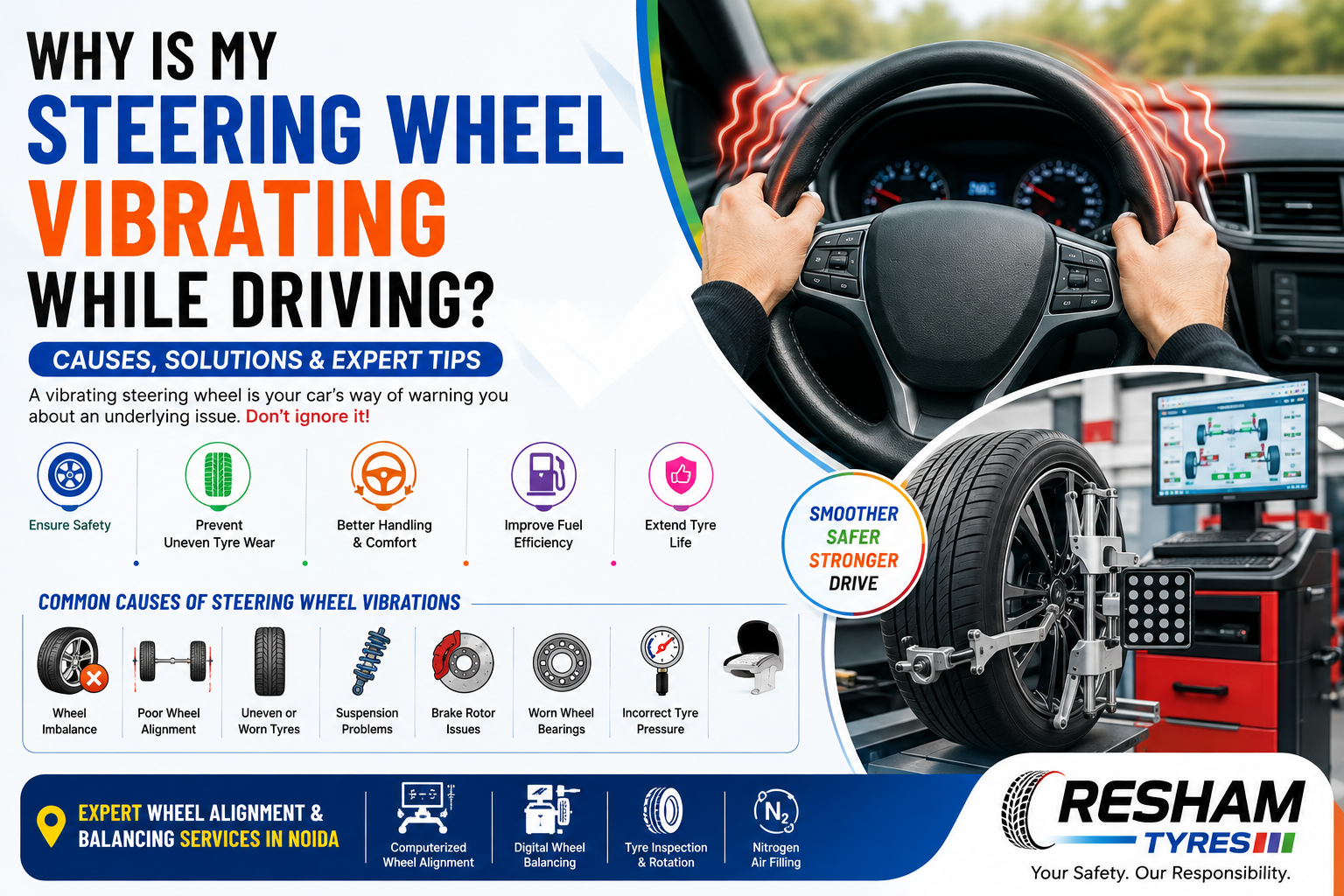
Steering wheel vibrations while driving are commonly caused by wheel alignment issues, wheel imbalance, uneven tyre wear, damaged tyres, suspension problems, or brake rotor defects. Identifying the exact cause early helps prevent expensive repairs and improves vehicle safety. Regular tyre inspections, computerized wheel alignment, and digital wheel balancing play a key role in maintaining steering stability, fuel efficiency, and tyre life. If your steering wheel vibrates, especially at highway speeds or during braking, have your vehicle inspected by qualified professionals. At Resham Tyres Pvt. Ltd., we offer advanced Wheel Alignment Service in Noida, precision wheel balancing, and expert tyre care to keep your vehicle driving smoothly and safely.
Have you ever noticed your steering wheel vibrating while driving, especially at speeds between 60–100 km/h? While it may seem like a minor inconvenience at first, steering wheel vibrations are often your vehicle’s way of warning you that something isn’t right.
Ignoring this issue can lead to uneven tyre wear, poor handling, reduced fuel efficiency, suspension damage, and increased repair costs. In some cases, it may even compromise your safety on the road.
The good news is that most steering wheel vibration problems can be diagnosed and fixed early with a professional inspection. Common causes include wheel alignment issues, wheel balancing problems, damaged tyres, worn suspension components, brake rotor defects, or incorrect tyre pressure.
At Resham Tyres Pvt. Ltd., we provide advanced Wheel Alignment Service in Noida using computerized alignment equipment and precision wheel balancing to help restore your vehicle’s stability, comfort, and safety.
In this guide, we’ll explain why your steering wheel vibrates, what causes it, how to identify the problem, and when you should visit a trusted tyre and wheel alignment expert.
What Does a Vibrating Steering Wheel Mean?
Your steering wheel should feel stable and smooth under normal driving conditions. If it starts shaking or vibrating, your car is likely experiencing an imbalance or mechanical issue that needs attention.
The vibration may occur:
- Only at high speeds
- While braking
- During acceleration
- While turning
- Continuously while driving
Each symptom points toward a different underlying issue, making early diagnosis important.
If left untreated, even a small vibration can gradually damage tyres, suspension parts, steering components, and wheel bearings.
Is It Safe to Drive with a Vibrating Steering Wheel?
The answer depends on the severity of the vibration.
A slight vibration caused by minor wheel imbalance may not seem urgent, but it should still be inspected promptly. Strong or increasing vibrations, especially when braking or driving at highway speeds, can indicate serious issues affecting vehicle control.
Driving with unresolved steering wheel vibrations may result in:
✔ Reduced steering control
✔ Uneven tyre wear
✔ Longer braking distances
✔ Increased suspension wear
✔ Poor fuel efficiency
✔ Higher maintenance costs
✔ Reduced passenger comfort
If the vibration becomes more noticeable over time, it’s advisable to have your vehicle inspected by professionals offering Wheel Alignment Service in Noida before further damage occurs.
8 Common Causes of Steering Wheel Vibrations
Several vehicle components can contribute to steering wheel vibrations. Understanding these causes helps you identify the problem early.
1. Incorrect Wheel Alignment (Most Common Cause)
One of the leading reasons for steering wheel vibration is improper wheel alignment.
When the wheels are not aligned according to the manufacturer’s specifications, they no longer point in the correct direction. This creates uneven tyre contact with the road surface, affecting steering stability and tyre wear.
Common Symptoms
- Car pulls left or right
- Crooked steering wheel
- Uneven tyre wear
- Reduced steering response
- Vibration at moderate or high speeds
Wheel alignment problems commonly occur after:
- Hitting potholes
- Driving over speed breakers at high speed
- Minor accidents
- Suspension repairs
- Installing new tyres
A professional Wheel Alignment Service in Noida can restore proper wheel angles, improve handling, and extend tyre life.
2. Unbalanced Wheels
Wheel balancing ensures that the weight of the tyre and wheel assembly is evenly distributed.
Even a small imbalance becomes more noticeable as vehicle speed increases.
Common Symptoms
- Steering wheel shakes above 70–80 km/h
- Vehicle vibrations on highways
- Uneven tyre wear
- Reduced driving comfort
Digital wheel balancing eliminates these vibrations and provides a smoother driving experience.
3. Uneven or Worn Tyres
Tyres naturally wear over time, but uneven wear usually indicates another underlying issue such as:
- Poor wheel alignment
- Incorrect tyre pressure
- Suspension problems
- Lack of tyre rotation
Driving on uneven tyres increases steering vibrations and reduces braking performance.
Inspect tyres regularly for:
- Low tread depth
- Sidewall cracks
- Bulges
- Flat spots
- Feathered tread
4. Incorrect Tyre Pressure
Maintaining proper tyre pressure is essential for safe driving.
Both overinflated and underinflated tyres can create instability, reduce grip, and increase steering vibrations.
Incorrect tyre pressure may also lead to:
- Poor fuel efficiency
- Uneven tyre wear
- Reduced tyre life
- Increased braking distance
Always follow the tyre pressure recommended by your vehicle manufacturer.
5. Bent Alloy Wheels or Damaged Rims
Driving through deep potholes or striking curbs can bend alloy wheels.
Even slight wheel deformation can cause:
- Steering vibrations
- Air leakage
- Wheel imbalance
- Tyre damage
A professional inspection can determine whether repair or replacement is required.
6. Worn Suspension Components
Your vehicle’s suspension absorbs road shocks and keeps tyres in proper contact with the road.
Worn suspension parts such as:
- Ball joints
- Tie rods
- Control arms
- Bushings
- Shock absorbers
can reduce steering precision and create noticeable vibrations.
7. Brake Rotor Problems
If the steering wheel vibrates only while braking, warped brake rotors may be responsible.
Typical symptoms include:
- Steering wheel shaking during braking
- Brake pedal pulsation
- Reduced braking efficiency
Brake components should be inspected immediately to ensure safe stopping performance.
8. Wheel Bearing Wear
Wheel bearings allow wheels to rotate smoothly.
Damaged or worn bearings may produce:
- Steering vibration
- Humming noises
- Wheel play
- Reduced vehicle stability
Ignoring wheel bearing issues can lead to expensive repairs and potential safety risks.
How Tyres Affect Steering Wheel Vibrations
Many drivers overlook the role tyres play in steering stability.
Tyres with uneven wear, incorrect air pressure, damaged sidewalls, or manufacturing defects can all contribute to steering wheel vibrations.
Professional tyre inspections can identify problems before they become serious.
During a tyre inspection, experts typically check:
- Tyre tread depth
- Sidewall condition
- Air pressure
- Wheel balancing
- Wheel alignment
- Rim condition
Regular inspections help improve safety while extending tyre life.
How Wheel Alignment Improves Driving Comfort
Proper wheel alignment ensures all four wheels are positioned according to the vehicle manufacturer’s specifications.
Benefits include:
✔ Smooth Steering
✔ Better Highway Stability
✔ Improved Fuel Efficiency
✔ Longer Tyre Life
✔ Reduced Suspension Wear
✔ Better Cornering Control
✔ Enhanced Driving Comfort
If you frequently drive on uneven roads, encounter potholes, or notice steering issues, scheduling a Wheel Alignment Service in Noida is a smart preventive measure.
Warning Signs You Should Never Ignore
Your vehicle may need immediate inspection if you notice:
🚨 Steering wheel vibrating above 60 km/h
🚨 Car pulling to one side
🚨 Uneven tyre wear
🚨 Crooked steering wheel
🚨 Steering vibration while braking
🚨 Steering becoming loose
🚨 Increased road noise
🚨 Frequent tyre pressure loss
🚨 Suspension knocking sounds
Early diagnosis often prevents more extensive repairs and helps maintain your vehicle’s safety and performance.
Diagnosis, Wheel Alignment vs Wheel Balancing & Professional Solutions
If your steering wheel vibrates while driving, don’t assume the tyres are always at fault. The issue could originate from several vehicle components, including wheel alignment, wheel balancing, suspension, brakes, or tyres. A systematic inspection helps identify the exact cause and prevents unnecessary repairs.
How to Diagnose the Exact Cause of Steering Wheel Vibrations
Professional technicians follow a structured inspection process to identify the root cause.
Step 1: Check Tyre Condition
The first inspection begins with the tyres.
Experts examine:
✔ Uneven tread wear
✔ Sidewall cracks
✔ Bulges
✔ Flat spots
✔ Nails or punctures
✔ Manufacturing defects
Tyres showing uneven wear often indicate wheel alignment or suspension issues.
Step 2: Inspect Tyre Pressure
Improper tyre pressure changes the tyre’s contact with the road.
This can cause:
- Steering instability
- Uneven tyre wear
- Reduced braking performance
- Increased rolling resistance
Maintaining manufacturer-recommended tyre pressure improves both safety and fuel efficiency.
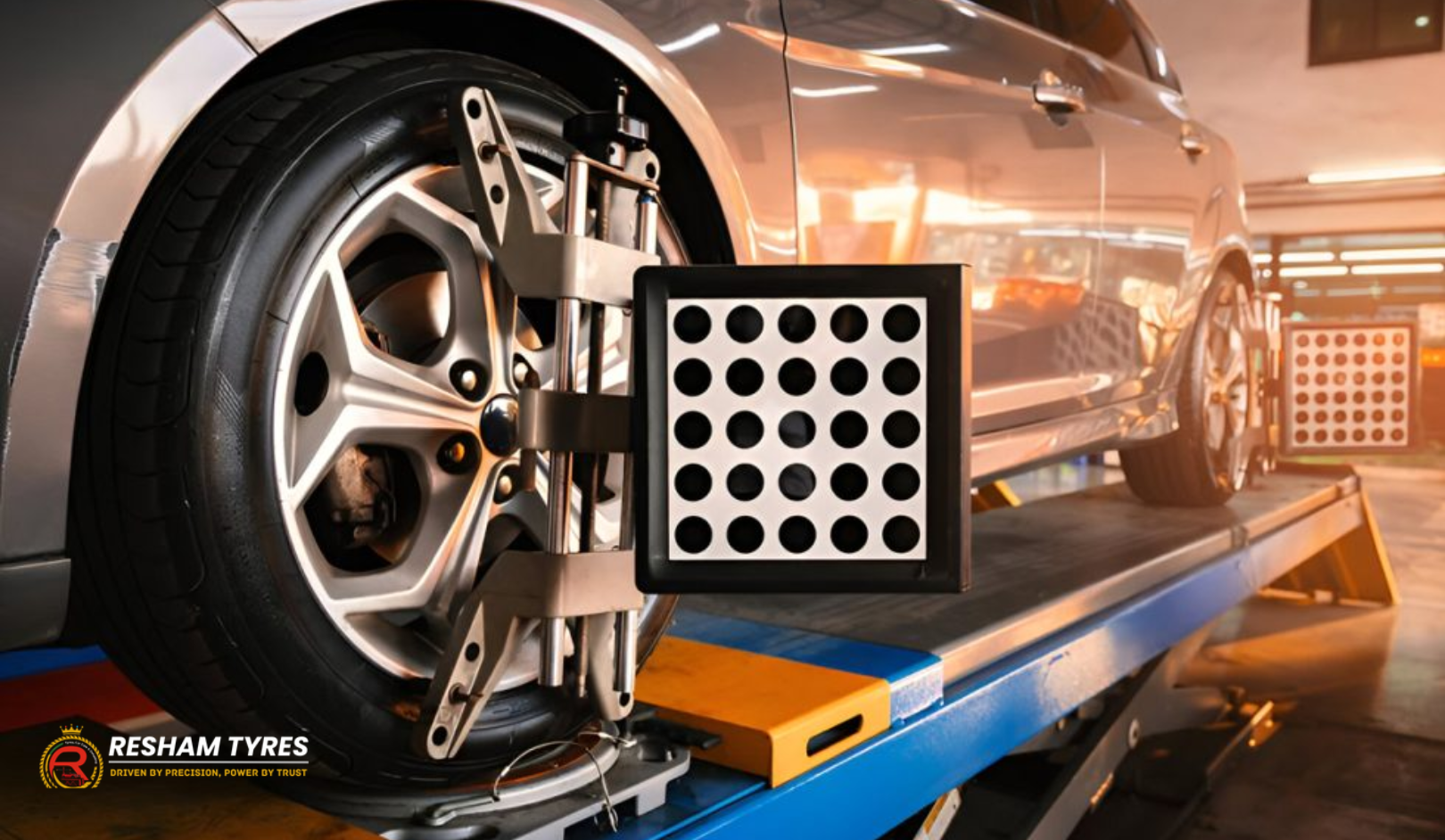
Step 3: Perform Computerized Wheel Alignment
Computerized wheel alignment measures the three critical wheel angles.
Camber
Controls whether the wheel leans inward or outward.
Incorrect camber causes:
- Inner tyre wear
- Outer tyre wear
- Reduced road grip
Caster
Caster affects steering stability.
Incorrect caster may result in:
- Poor straight-line stability
- Steering pull
- Heavy steering
Toe
Toe determines whether the front of the tyres point inward or outward.
Incorrect toe often causes:
- Feathered tyre wear
- Steering vibration
- Poor handling
Professional Wheel Alignment Service in Noida accurately adjusts these angles according to manufacturer specifications.
Wheel Alignment vs Wheel Balancing
Many drivers confuse these two services, but they solve different problems.
| Feature | Wheel Alignment | Wheel Balancing |
|---|---|---|
| Corrects wheel angles | ✅ | ❌ |
| Corrects weight imbalance | ❌ | ✅ |
| Prevents uneven tyre wear | ✅ | ✅ |
| Eliminates steering vibration | Sometimes | Yes (if caused by imbalance) |
| Improves steering control | ✅ | Partial |
| Extends tyre life | ✅ | ✅ |
| Improves fuel efficiency | ✅ | Slightly |
Ideally, both services should be performed together whenever new tyres are installed or vibration issues are detected.
Signs You Need Wheel Alignment
Your vehicle may require professional wheel alignment if you notice:
✔ Steering wheel is not centred
✔ Car drifts left or right
✔ Uneven tyre wear
✔ Steering feels unstable
✔ Steering wheel vibrates after hitting potholes
✔ Reduced fuel efficiency
Even if your vehicle feels normal, experts recommend checking wheel alignment every 8,000–10,000 km or after significant road impacts.
Signs You Need Wheel Balancing
Wheel balancing is usually required when:
✔ Steering wheel shakes at 70–100 km/h
✔ Vibration increases with speed
✔ New tyres have been installed
✔ Alloy wheels have been repaired
✔ Balance weights have fallen off
Digital balancing restores smooth rotation and reduces vibration.
When Do Tyres Need Replacement?
Steering wheel vibration may also indicate tyres have reached the end of their service life.
Replace tyres if you notice:
Low Tread Depth
Reduced tread significantly affects wet-road grip and braking.
Uneven Wear
Common causes include:
- Poor alignment
- Incorrect tyre pressure
- Suspension wear
Sidewall Damage
Cuts, cracks, or bulges weaken tyre strength and should never be ignored.
Frequent Air Loss
Tyres that regularly lose pressure require immediate inspection.
Ageing Tyres
Even unused tyres gradually deteriorate.
Experts generally recommend replacing tyres after 5–6 years, depending on their condition and usage.
Suspension Problems That Cause Steering Vibrations
The suspension system keeps tyres firmly connected to the road.
Worn suspension components may include:
- Ball Joints
- Tie Rod Ends
- Shock Absorbers
- Control Arm Bushings
- Stabilizer Links
Symptoms include:
✔ Steering looseness
✔ Knocking sounds
✔ Uneven tyre wear
✔ Poor cornering stability
✔ Steering wheel vibration
Suspension inspection is often recommended during tyre replacement or wheel alignment.
Brake Issues That Can Cause Vibrations
If vibration occurs only while braking, the braking system should be inspected.
Possible causes:
Warped Brake Rotors
Heat can cause brake rotors to deform over time.
Symptoms:
- Steering shakes during braking
- Brake pedal pulsation
- Reduced stopping performance
Worn Brake Pads
Uneven brake pad wear may also contribute to vibration.
Brake components should always be inspected by qualified technicians.
Why Computerized Wheel Alignment Matters
Modern computerized wheel alignment systems provide highly accurate measurements compared to manual methods.
Benefits include:
✔ Precise Wheel Angle Adjustment
✔ Better Highway Stability
✔ Reduced Tyre Wear
✔ Improved Fuel Efficiency
✔ Better Steering Response
✔ Enhanced Driving Comfort
✔ Longer Suspension Life
Computerized equipment ensures adjustments meet your vehicle manufacturer’s specifications.
Benefits of Professional Wheel Alignment Service in Noida
Choosing an experienced tyre specialist provides several advantages.
Professional services include:
✔ Digital Wheel Alignment Equipment
✔ Advanced Wheel Balancing Machines
✔ Tyre Health Inspection
✔ Suspension Check
✔ Steering Inspection
✔ Experienced Technicians
✔ Manufacturer-Recommended Settings
At Resham Tyres Pvt. Ltd., our technicians use modern computerized alignment technology to help improve steering stability, extend tyre life, and deliver a smoother driving experience.
How Often Should You Get Wheel Alignment?
Experts generally recommend wheel alignment:
- Every 8,000–10,000 km
- After replacing tyres
- After suspension repairs
- After hitting large potholes
- If the steering wheel is off-centre
- If uneven tyre wear appears
- Before long road trips
Routine alignment helps prevent premature tyre replacement and improves overall vehicle performance.
Can Wheel Alignment Improve Fuel Efficiency?
Yes.
When wheels are properly aligned:
- Tyres roll more freely.
- Rolling resistance decreases.
- The engine works more efficiently.
- Fuel consumption may improve.
- Tyres wear more evenly.
Although alignment alone won’t dramatically increase mileage, it contributes to better overall efficiency and lower operating costs.
Expert Recommendation
If your steering wheel vibrates, avoid guessing the cause or delaying inspection. A professional diagnosis can identify whether the issue stems from tyres, wheel balancing, wheel alignment, suspension, or braking components.
Addressing the problem early not only improves driving comfort but also helps prevent costly repairs and extends the life of your tyres.
Prevention Tips, FAQs, Expert Advice & Why Choose Resham Tyres
Ignoring steering wheel vibrations may seem harmless at first, but delaying inspection can lead to uneven tyre wear, suspension damage, poor fuel economy, and expensive repairs. Fortunately, regular maintenance and timely inspections can prevent most steering-related problems.
How to Prevent Steering Wheel Vibrations
Following a few simple maintenance practices can significantly reduce the chances of steering wheel vibrations and improve your vehicle’s overall performance.
1. Get Regular Wheel Alignment
Wheel alignment gradually changes due to potholes, speed breakers, rough roads, and daily driving.
Professional Wheel Alignment Service in Noida helps:
✔ Keep the steering wheel straight
✔ Improve tyre life
✔ Reduce steering vibrations
✔ Improve fuel efficiency
✔ Increase driving comfort
Experts recommend checking wheel alignment every 8,000–10,000 km or after any major road impact.
2. Balance Your Wheels Regularly
Wheel balancing ensures even weight distribution across all four wheels.
Benefits include:
- Smooth highway driving
- No steering wheel shaking
- Better tyre life
- Reduced suspension wear
Always balance wheels:
- After installing new tyres
- After tyre rotation
- If vibration appears at higher speeds
3. Maintain Correct Tyre Pressure
Incorrect tyre pressure is one of the most overlooked causes of steering problems.
Check tyre pressure:
- Every two weeks
- Before long journeys
- After major temperature changes
Correct pressure improves:
✔ Grip
✔ Fuel economy
✔ Tyre lifespan
✔ Ride comfort
4. Rotate Tyres Periodically
Tyre rotation helps tyres wear evenly.
Recommended interval:
Every 8,000–10,000 km
Benefits:
- Longer tyre life
- Better stability
- Improved braking
- Better fuel efficiency
5. Inspect Tyres Frequently
Look for:
✔ Uneven tread wear
✔ Cuts
✔ Cracks
✔ Bulges
✔ Nails
✔ Sidewall damage
Early inspection often prevents costly tyre replacement.
6. Drive Carefully Over Potholes
Large potholes can affect:
- Wheel alignment
- Alloy wheels
- Suspension
- Tyres
Slowing down over rough roads helps reduce long-term damage.
7. Replace Worn Tyres on Time
Old tyres lose grip and stability even if they appear to have sufficient tread.
Replace tyres if:
- Tread depth is low
- Sidewalls are damaged
- Tyres are over 5–6 years old
- Frequent punctures occur
Why Choose Resham Tyres for Wheel Alignment Service in Noida?
Choosing the right tyre service centre is just as important as choosing the right tyres.
At Resham Tyres Pvt. Ltd., Noida, we combine experienced technicians with advanced equipment to ensure accurate diagnosis and professional service.
Our Services
✔ Computerized Wheel Alignment
✔ Digital Wheel Balancing
✔ Premium Tyre Brands
✔ Tyre Rotation
✔ Nitrogen Air Filling
✔ Tyre Health Inspection
✔ TPMS Support
✔ Professional Tyre Installation
✔ Suspension & Steering Inspection
Whether your steering wheel vibrates, your car pulls to one side, or your tyres are wearing unevenly, our experts help identify the root cause and recommend the most effective solution.
Frequently Asked Questions (FAQs)
Why does my steering wheel vibrate while driving?
Common causes include wheel imbalance, improper wheel alignment, uneven tyre wear, damaged tyres, suspension problems, brake rotor issues, or worn wheel bearings.
Why does my steering wheel shake only at high speed?
Steering vibration above 70–100 km/h is often caused by unbalanced wheels or bent alloy wheels.
Can wheel alignment fix steering wheel vibration?
Yes, if the vibration is caused by incorrect wheel angles or uneven tyre wear. A professional Wheel Alignment Service in Noida can restore proper steering stability.
Does wheel balancing stop steering wheel vibrations?
Yes. If the vibration is caused by uneven wheel weight distribution, digital wheel balancing usually resolves the issue.
How often should wheel alignment be checked?
Most experts recommend checking wheel alignment every 8,000–10,000 km, after replacing tyres, or after hitting large potholes.
Can uneven tyre wear cause steering vibration?
Yes. Uneven tyre wear changes how the tyre contacts the road, leading to vibrations and reduced handling.
Should I replace tyres if my steering vibrates?
Not always. A professional inspection will determine whether the issue is due to tyres, wheel balancing, wheel alignment, suspension, or braking components.
Can incorrect tyre pressure cause steering problems?
Yes. Overinflated and underinflated tyres reduce road contact and may affect steering stability.
Is it safe to drive with a vibrating steering wheel?
Minor vibrations may not be immediately dangerous, but persistent or worsening vibrations should be inspected promptly to avoid additional damage and maintain safe vehicle control.
What is the difference between wheel alignment and wheel balancing?
Wheel alignment adjusts the wheel angles, while wheel balancing distributes the tyre and wheel weight evenly. Both are important for smooth driving and tyre longevity.
Expert Recommendations
If your steering wheel starts vibrating:
✔ Don’t ignore the warning signs.
✔ Check tyre pressure first.
✔ Inspect tyres for visible damage.
✔ Get computerized wheel alignment.
✔ Perform digital wheel balancing.
✔ Replace damaged or worn tyres when necessary.
✔ Visit a trusted tyre specialist instead of delaying repairs.
Timely maintenance improves safety, saves money, and extends the life of your tyres.